
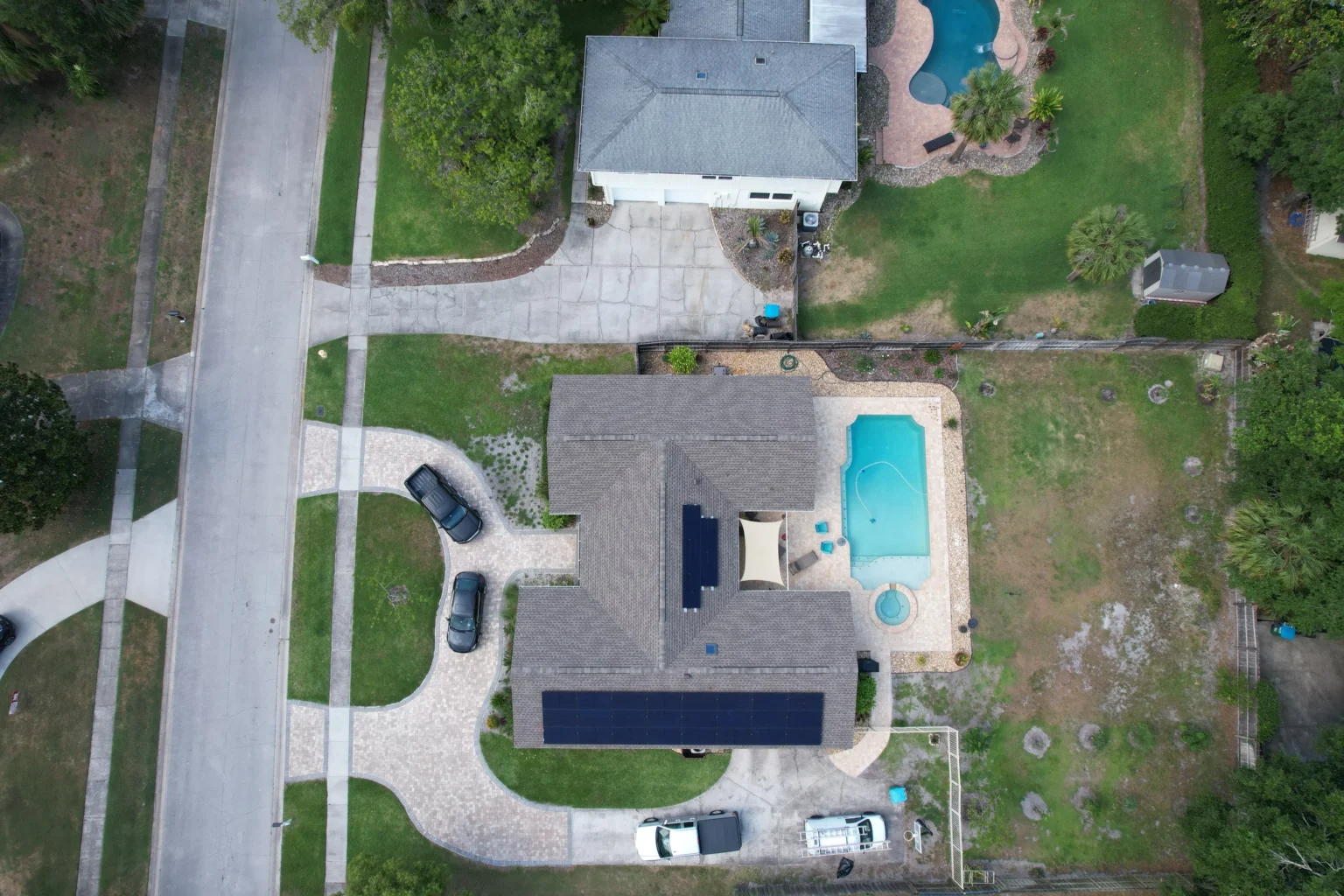
No. In Florida, a homeowners association cannot stop you from installing solar panels on your home, and it cannot turn down your application because the board would rather not see panels from the street. That is not an installer’s opinion — it is a state statute. Florida’s solar rights law, section 163.04 of the Florida Statutes, says that a deed restriction, covenant, or similar binding agreement “may not prohibit or have the effect of prohibiting” solar collectors, and that a property owner “may not be denied permission” to install them by any entity with the power to approve alterations to the property — which is precisely what an HOA architectural review committee is.
What an association can lawfully do is far narrower than most homeowners (and, frankly, many HOA boards) believe: it may have a say in where on your roof the panels go, and only within tight statutory limits that protect the system’s performance. This article walks through what the statute actually says, what your association can and cannot require, how the law treats condominiums differently, and how the approval process usually goes in practice — so you can submit your architectural review application knowing exactly where you stand. One note up front: this is general information about a public statute, not legal advice for your specific situation. If you are in an active dispute with your association, talk to a Florida attorney.
Florida’s protection for residential solar is not new, and it is not obscure. Section 163.04, titled “Energy devices based on renewable resources,” has been on the books since 1980, and its current text has been stable since 2008. We re-checked the statute on the Florida Senate’s official statutes site the day this article was written; everything quoted here is from that current text.
The statute does three big things:
First, it blocks local governments from banning solar. Subsection (1) says the adoption of any ordinance that “prohibits or has the effect of prohibiting” the installation of solar collectors, clotheslines, or other renewable-energy devices is “expressly prohibited.” Your city or county cannot zone solar panels out of existence.
Second, it blocks deed restrictions and HOA covenants from doing the same thing. Subsection (2) applies the identical standard to private land-use controls: a deed restriction, covenant, declaration, or similar binding agreement “may not prohibit or have the effect of prohibiting” solar collectors from being installed on buildings on the covered lots. Then it goes a step further and speaks directly to the approval process: a property owner “may not be denied permission” to install solar collectors by any entity granted the power to “approve, forbid, control, or direct alteration of property” with respect to residential dwellings. That sentence describes an architectural review board exactly.
Third, it gives the law teeth. Subsection (3) says that in any litigation arising under the section, the prevailing party is entitled to costs and reasonable attorney’s fees. More on why that matters below.
Notice the phrase that appears in both of the first two protections: “or has the effect of prohibiting.” The Legislature did not just ban rules that say “no solar.” It banned rules that accomplish the same result indirectly — the death-by-conditions approach, where permission is technically available but the required placement or restrictions would gut the system’s output. That phrase is the backbone of the statute.
The statute leaves associations one specific, limited power over solar installations, and it is worth reading in full. The reviewing entity “may determine the specific location where solar collectors may be installed on the roof within an orientation to the south or within 45° east or west of due south if such determination does not impair the effective operation of the solar collectors.”
Unpack that and you get two conditions, both of which must be satisfied for an association’s placement decision to hold up:
The placement has to stay within the productive band. In the northern hemisphere, roof planes facing south — or up to 45 degrees east or west of due south — are where a fixed solar array earns its keep. The statute lets an association steer panels only within that band. An association cannot use its placement power to push your array around to a north-facing plane to keep it out of sight.
Even inside the band, the placement cannot impair effective operation. If the association’s preferred spot is shaded by a chimney, a dormer, or the neighbor’s oak tree, or is simply too small for the system your usage requires, then the determination fails the statute’s own test. Performance is the limiting principle the Legislature wrote into the law — not curb appeal.
Beyond placement, associations retain their ordinary process rights: they can ask you to submit an application, provide the panel layout and equipment specifications, use licensed and insured contractors, and follow the community’s normal review timeline. Those process requirements are legitimate — right up until they “have the effect of prohibiting” the installation or drag placement outside the statutory limits. Where exactly a burdensome condition crosses that line in a specific community is a question for a Florida attorney; the statute supplies the test, and the facts decide the case.
Subsection (3) is short, but it does a lot of work: the prevailing party in litigation under this section is entitled to costs and reasonable attorney’s fees. That cuts both ways, and it disciplines both sides of the table.
For an association, enforcing a covenant that conflicts with section 163.04 is not just a losing legal position — it is a losing position where the association may end up paying the homeowner’s lawyer as well as its own. Association counsel know this, which is why a polite letter citing the statute resolves many of these disagreements without anyone filing anything. For a homeowner, the same clause is a reason not to overreach: the protection covers what the statute covers, and a homeowner who sues over a legitimate process requirement can end up on the wrong side of the fee award. The practical effect, in our experience, is that section 163.04 conversations tend to get reasonable quickly once everyone has actually read it.
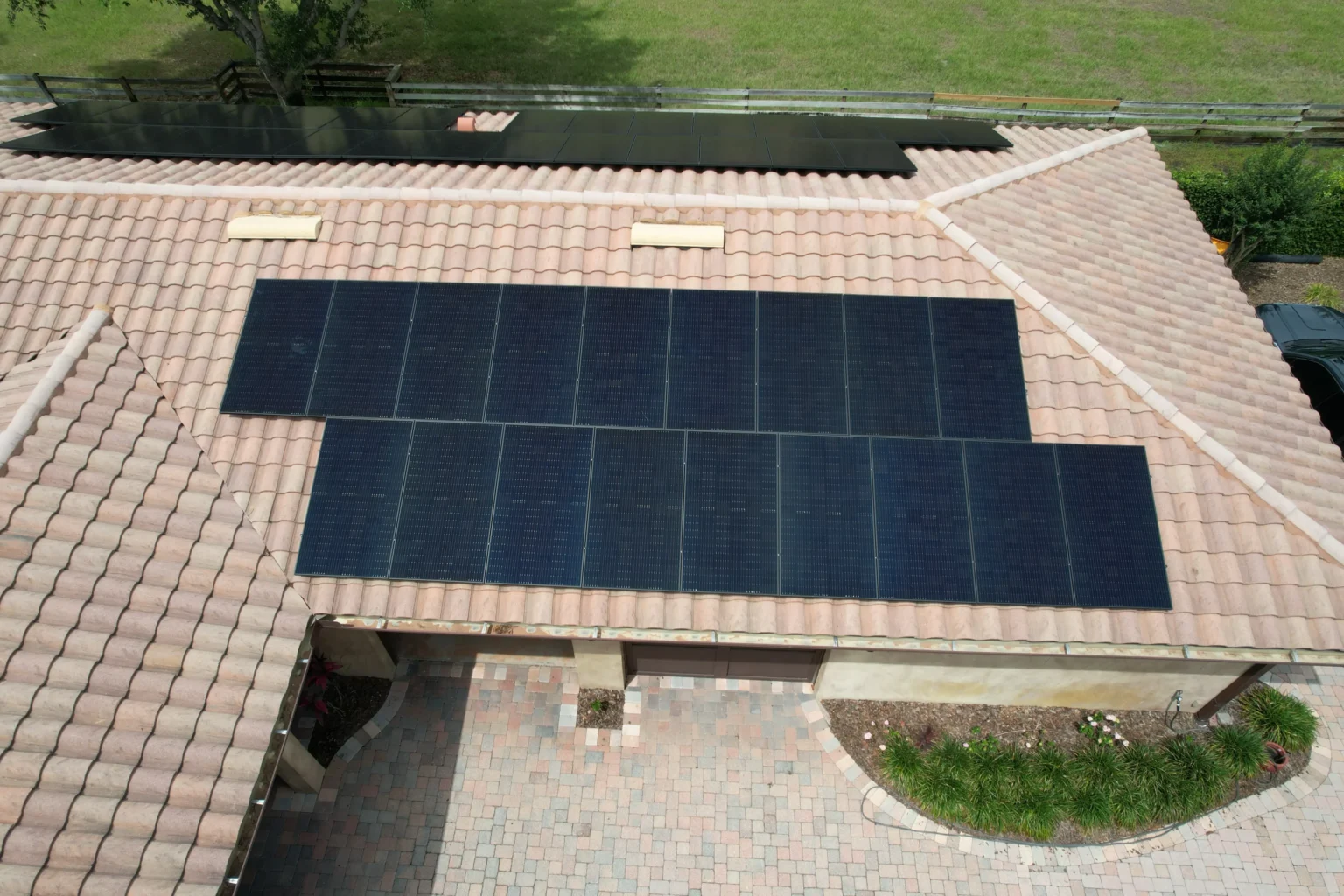
The statute’s protection for the approval process applies “with respect to residential dwellings and within the boundaries of a condominium unit.” For a single-family home in a deed-restricted community, that is straightforward: the roof is yours, and the protection applies. For condominiums, those last few words matter enormously.
In most Florida condominiums, the roof is not part of any unit — it is a common element owned collectively by all owners. A solar array on a common-element roof is not an installation “within the boundaries of a condominium unit,” so the statute’s homeowner protection does not simply carry over. Rooftop solar on a condo building typically has to go through the association as a collective decision rather than an individual right. Townhomes fall on either side of the line depending on how the governing documents draw unit boundaries: if you own your roof, you are generally in single-family territory; if the roof is a common element, you are closer to the condo situation. Your declaration of condominium or covenants will say which one you have — and this is a place where an hour of a Florida attorney’s time is well spent.
One more carve-out written right into the statute: it does not apply to patio railings in condominiums, cooperatives, or apartments. Balcony-railing solar is not protected the way rooftop solar on your own dwelling is.
Reading statutes is useful; knowing how the process usually unfolds is calming. In the managed communities where we install, the sequence typically looks like this:
1. The application. Most associations use a standard architectural review form. A complete solar application generally includes the roof layout drawing showing panel placement, equipment specification sheets, and the contractor’s license and insurance information. We prepare this package for our customers alongside the permit paperwork — it is largely the same documentation the building department wants, which we covered in our county-by-county guide to Florida solar permit timelines.
2. The review. Boards and committees mostly approve solar applications without drama — especially when the submission is complete and professional. When questions come up, they are usually about placement, and the statutory framework above is the answer key: within the southern band, placement is a conversation; outside it, or where a placement would impair output, the statute has already decided.
3. Permits and inspection. HOA approval and government permitting are separate tracks. Section 163.04 restrains your association; it does not exempt anyone from the Florida Building Code, permits, or inspections. A licensed contractor runs both tracks in parallel so neither waits on the other.
A quiet reality worth naming: panels have become a normal sight in Florida neighborhoods. Boards that fought rooftop solar in 2010 mostly process it as routine paperwork today — not least because well-designed arrays on modern equipment are low-profile, all-black, and installed flush to the roof plane. If longevity is part of your board’s concern, our piece on how long solar panels last in Florida covers what the equipment warranties actually promise, in writing.
Can my HOA reject my solar application because of how the panels will look? Aesthetics are not among the powers the statute leaves to associations. An association may determine placement only within the south-facing band described above, and only where that does not impair the system’s effective operation. A denial is what the statute says may not happen.
Can the association make me put the panels where nobody can see them? Only if that location is within 45 degrees of due south and does not impair effective operation. If the hidden location fails either condition, the determination is outside the association’s statutory power.
Do I still have to submit an application? Yes — and you should. The statute restrains what the association may decide; it does not erase the community’s process. A complete, professional submission is also the fastest path to a quiet approval.
What if my association says no anyway? Associations sometimes deny first and read the statute second. A written response citing section 163.04 — often from your contractor, sometimes from an attorney — resolves most of these. If it goes further, the prevailing-party fee provision means the association’s own counsel has a strong incentive to correct course. For an actual dispute, retain a Florida attorney; this article is background, not representation.
Does the statute cover ground-mounted systems? The covenant subsection speaks to solar collectors “installed on buildings.” If you are considering a ground mount in a deed-restricted community, the statutory footing is different, and that is a question worth putting to a Florida attorney rather than assuming either way.
Can my city or county ban solar even if my HOA cannot? No. Subsection (1) expressly prohibits local ordinances that prohibit — or have the effect of prohibiting — solar collectors.
Where can I read the law myself? The full current text of Fla. Stat. sec. 163.04 is two screens long and written in plain English. For the rest of the Florida-specific questions we hear — insurance, permits, batteries, net metering — see our Florida Solar FAQ.
Florida decided, more than four decades ago, that the choice to put solar on your own roof belongs to you — not to your city, and not to your HOA. Your association keeps a real but narrow role: process, paperwork, and placement within the statute’s south-facing band, so long as your system’s performance is not impaired. If you live in a managed community and have been assuming the board would never allow panels, the law is almost certainly friendlier than you think — and the right first step is a system design and a complete application, not a fight. We handle the HOA package and the permits together, and we will tell you honestly if your roof, your shading, or your community’s documents raise a genuine complication.
Get a free, no-pressure solar assessment for your Florida home.

About the author: Joe Cataldo is the CEO of Goldin Solar, LLC, a Vero Beach, Florida–based solar installation company serving homeowners and businesses across the state. He holds a Florida Certified Solar Contractor license (CVC57300) and a Florida Certified Electrical Contractor license (EC13013985), both issued by the Florida Department of Business and Professional Regulation. Joe personally oversees system design standards and code compliance on Goldin Solar projects.