
Battery-Only Retrofits in Florida: Adding Storage to an Existing Solar System
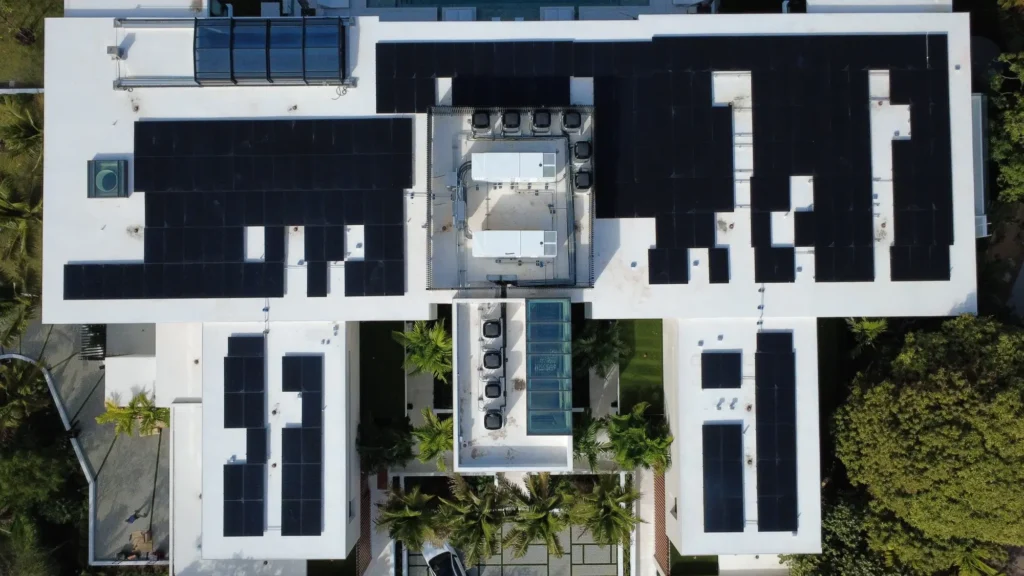
Battery-Only Retrofits in Florida: Adding Storage to an Existing Solar System Short answer: yes — a battery can almost always be added to an existing grid-tied solar system in Florida, and it is one of the most common projects we quote. The right way to do it depends on the equipment already on your wall: an AC-coupled battery installs alongside nearly any existing solar inverter without disturbing the original system, while a hybrid retrofit replaces an aging inverter with one device that manages both panels and storage. Homeowners with no solar at all can go battery-first and add panels later. In Florida the motivation is rarely complicated: a standard grid-tied solar system shuts itself down during a power outage, and a battery is the piece of hardware that turns your array into genuine backup power for the days after a storm. This article walks through the three retrofit paths, what whole-home versus essential-loads backup really means, how to size a retrofit honestly, and the Florida-specific details — heat, wind, flood zones, permits, and interconnection paperwork — that decide how well the project goes. The fact that surprises most solar owners: panels alone do not power an outage Start with the misconception we clear up on almost every retrofit call. A grid-tied solar system without storage is required to shut down when the grid goes down. That behavior — called anti-islanding — is a safety requirement, not a defect: it keeps your panels from energizing lines that utility crews are working on. So the homeowner who watched a week of post-hurricane sunshine fall on a silent array is not describing a broken system. They are describing a system that was never designed to island. A battery retrofit changes what the system fundamentally is. With storage and the right islanding hardware, the home separates from the grid automatically during an outage and runs as its own small grid: the battery carries the house through the night, and the panels recharge the battery every day the sun comes up. That daily recharge is the difference between backup measured in hours and backup that can carry a household through an extended restoration. We covered the storm-behavior side of this in detail in our hurricane season preparation guide. The three retrofit paths, in plain terms Nearly every battery retrofit lands in one of three architectures, and which one fits is mostly a question about your existing inverter. 1. AC-coupled addition — the workhorse of retrofits An AC-coupled battery brings its own built-in inverter and connects on the alternating-current side of your electrical system. Your existing solar inverter keeps doing exactly what it does today; the battery system sits beside it and manages charging, discharging, and the switchover during an outage. Because the two systems talk over the house wiring rather than sharing electronics, AC coupling works with virtually any existing grid-tied array, whether it uses a string inverter or microinverters. This is the least disruptive path and the one most Florida retrofits take. The honest footnote: energy that flows from panels to battery to house passes through more conversion steps than it would in a system designed around a single hybrid inverter, and each conversion loses a little. For a resilience-driven Florida retrofit this is a footnote, not a dealbreaker — but a straight answer about it belongs in any quote conversation. 2. Hybrid retrofit — when the inverter is due anyway Solar inverters do not last as long as panels. If your string inverter is deep into its service life or already showing faults, replacing it with a hybrid inverter — one device that manages panels and battery together — can make more sense than bolting a second system beside a first one that is on its way out. The project is more involved, because the original solar system is being rewired through new equipment, but the result is a cleaner single-brain system. The decision is rarely ideological: it usually comes down to the age and warranty status of what is on the wall today. 3. Battery-first, no panels yet You do not need solar to benefit from storage. A standalone battery charges from the grid, watches for the outage, and carries the essential loads when it comes. For households that are not ready for a full array — roof timing, budget cycles, or an upcoming move — a battery-first installation delivers the resilience piece now. The design detail that matters: choose equipment with a clear path to adding panels later, so the eventual array plugs into the platform you already own instead of forcing a redesign. Whole-home backup versus essential-loads backup: the honest conversation The single most important expectation-setting conversation in a battery retrofit is what, exactly, stays on. There are two basic designs: Essential-loads backup. The installer builds a protected-loads subpanel and moves the circuits that matter into it: refrigerator, internet and phones, lights, fans, garage door, a well pump where applicable. During an outage, the battery carries that subpanel and nothing else. This is the design that stretches a modest battery across multiple days, especially with solar recharging it. Whole-home backup. The battery system backs the entire panel, so the outage is close to invisible. It is a genuinely different scale of project: central air conditioning is the big variable, because compressors draw heavily — both continuously and in the surge when they start. Whole-home designs in Florida usually mean more stored energy, attention to surge capability, and sometimes a soft-start device on the air conditioner to tame that startup draw. Neither design is the wrong answer. What is wrong is a proposal that never asks the question. A homeowner who expects the air conditioner to run all night on a single small battery is going to be unhappy with an installation that was, on paper, executed perfectly. Sizing a retrofit honestly Battery sizing follows the same discipline we apply to solar sizing for high-usage Florida homes: start from your actual loads, not from a brochure. The questions that drive
Roof Replacement and Solar: Which Comes First for a Florida Home?

Roof Replacement and Solar: Which Comes First for a Florida Home? Short answer: the roof comes first — on the calendar and in the design conversation. Solar panels routinely produce power for a quarter-century, and the racking that holds them is engineered to stay put through Florida wind. The roof covering underneath is the only part of the assembly that may not last that long. If your roof has plenty of life left, install with confidence. If it is nearing the end of its service life, replace it first — or, better, plan the reroof and the solar installation as one coordinated project. What you want to avoid is the expensive middle path: putting a new solar array on a roof that will need replacement a few years later, then paying a crew to remove the panels, waiting out the reroof, and paying again to reinstall and recommission the system. This article walks through how to judge the timing honestly, what makes the question sharper in Florida than almost anywhere else, and how a coordinated roof-plus-solar project actually runs. Why timing matters: the panels will probably outlive the shingles A modern solar module is a slow-aging piece of hardware. Manufacturers commonly back panels with production warranties running twenty-five years, and well-built systems keep producing beyond the warranty paper. Inverters and racking have their own long service lives. Nothing about a properly engineered array needs attention on anything like a shingle-roof schedule. Florida asphalt shingles live a harder life than the national brochures suggest. Relentless ultraviolet exposure, summer heat, driving rain, and the occasional named storm age a shingle roof faster here than in milder climates. Metal and tile roofs last considerably longer, which is one reason the timing question lands differently depending on what is over your head. Put those two lifespans side by side and the design rule writes itself: the roof under a solar array should have at least as much life left as the array needs. When it does not, the mismatch eventually presents a bill — the cost of taking the system down and putting it back up in the middle of its productive life. What a mid-life reroof under solar actually involves Homeowners sometimes assume a roofer can simply work around the panels. They cannot. A reroof under an existing array means: Removal and storage. A qualified solar crew de-energizes the system, detaches and removes the modules and, usually, the racking, and stores the equipment safely while the roofing work proceeds. The reroof itself. The roofer replaces the covering and underlayment, working around (or replacing) dozens of attachment points. Reinstallation and recommissioning. The solar crew returns, re-flashes and re-mounts the racking, reinstalls the modules, remakes the electrical connections, and brings the system back online — with the workmanship on every roof penetration now shared between two trades and two visits. None of that is exotic, and reputable companies do it cleanly every week. But it is a real project with real mobilization, and while the panels sit on the ground they produce nothing. It is exactly the scenario a little planning at design time avoids. An honest way to judge your roof’s remaining life You do not need to guess. Here is the framework we use when we evaluate a roof during a solar site assessment: Age against material. A shingle roof in its first decade is usually a comfortable solar candidate. A shingle roof deep into its second decade deserves a hard conversation. Metal and tile change the arithmetic — both routinely outlast the shingle timelines that drive most replacement decisions. Condition over age. Curling or missing shingles, widespread granule loss, soft decking, repeated leak repairs, or storm damage all argue for replacement first, whatever the calendar says. What your insurer thinks. Florida homeowners know that roof age has become a central underwriting question in this market. Many carriers ask for roof inspections on older roofs, and an aging roof can complicate renewals. If your roof is approaching the age where your insurer starts asking questions, that is a strong signal to reroof before — or with — the solar project. Your horizon in the home. If you plan to be in the house for decades, sequencing the roof correctly matters more, not less: the array you install now should ride on a roof that can carry it for the long haul. An assessment that skips the roof conversation is not a complete solar assessment. If an installer quotes an array for a roof that plainly needs replacement soon and never mentions it, that tells you something about how the rest of the project will be handled. The strong case for doing both at once When a roof is genuinely near the end of its life, combining the reroof and the solar installation into one coordinated project is usually the cleanest path, for reasons that compound: One disruption instead of two. The scaffolding, the dumpster, the crews, the noise — it all happens once. The roofing crew finishes, the solar crew follows, and the house is done. Attachments designed into the roof, not retrofitted onto it. When the reroof and the array are planned together, the solar attachment points, flashing details, and underlayment strategy are coordinated from the start. The result is a cleaner assembly than bolting onto a covering that was never planned around penetrations. Warranty clarity. Roofing material manufacturers and roofing contractors each stand behind their work under specific terms. Coordinating the trades up front — who flashes what, who seals what, who answers for which detail — keeps those warranty lines clean and in writing, instead of leaving two companies pointing at each other years later. A clean quarter-century runway. New covering under a new array means the two assets age together. The expensive mid-life removal scenario disappears from the planning horizon. The practical objection is cash flow: a reroof and a solar system together is a bigger project than either alone. That is real, and the honest answer is
Solar Permits in Florida: How Long Do They Really Take?
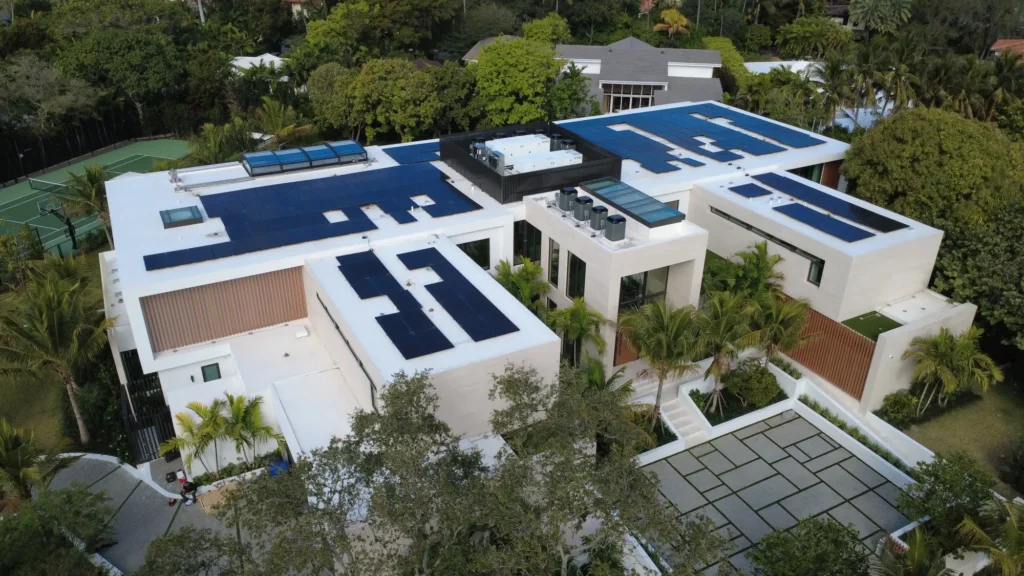
Solar Permits in Florida: How Long Do They Really Take? Short answer: the permit itself is usually not the long pole. In our experience installing across Florida, most residential solar permits are issued somewhere between a few days and a few weeks after a complete application is submitted — and the single biggest driver is not the government, it is whether the application was complete and code-correct on the first try. A clean submission to a jurisdiction with an online portal can come back in days; a package with a missing wind-load calculation or an outdated product approval can bounce through review comments for a month. The honest full-project answer is that permitting is one leg of a longer relay — design, engineering, permit, installation, inspection, and utility interconnection — and a Florida homeowner should think in terms of weeks from signed contract to switched-on system, not days and not seasons. This article walks through what the permit actually covers, what each stage involves, why identical houses in neighboring cities can see different timelines, and what you (and your installer) can do to keep the clock moving. Why solar needs a permit in Florida at all A rooftop solar installation is both a structural change to your roof and a significant electrical modification to your home, so it sits squarely inside the Florida Building Code. Your local building department — the “authority having jurisdiction,” or AHJ, which is your city or county depending on where you live — reviews two things before anyone climbs on your roof: Structural attachment. Florida designs for hurricane wind loads. The permit package includes engineering showing the racking and attachments can resist the wind pressures required for your site under the Florida Building Code, which incorporates the ASCE 7 wind-load standard. Roof type, roof age, attachment spacing, and panel layout all feed this calculation. Electrical work. The system’s wiring, disconnects, rapid-shutdown equipment, and interconnection with your main panel are reviewed against the National Electrical Code as adopted by Florida. This is a feature, not a bureaucratic obstacle. The same review that takes a week or two is the reason properly permitted Florida arrays overwhelmingly stay on roofs through storms that strip shingles. A contractor who suggests skipping or short-cutting the permit is volunteering you for insurance problems, resale problems, and a system with nobody checking the engineering. The stages of a Florida solar project, and where the time actually goes 1. Site assessment and design (typically the first week or two). Usage analysis, roof measurements, shading, panel layout, electrical one-line diagram. This stage is in your installer’s control entirely. 2. Engineering (often overlapped with design). The structural letter and wind-load calculations that Florida jurisdictions require, stamped by a licensed engineer. Installers who run standardized, pre-engineered racking configurations move through this quickly; one-off designs take longer. 3. Permit submission and plan review — the part people worry about. Most Florida jurisdictions of any size now accept solar permit applications through online portals, and review happens in one or more passes. If the reviewer finds an issue — a missing document, an expired product approval, an unclear roof plan — they issue comments, the installer responds, and the clock restarts on that review cycle. A complete first submission is the difference between one cycle and three. 4. Installation (usually one to three days on the roof). Scheduling depends on the installer’s backlog and, in summer, on Florida weather windows. 5. Inspection. The AHJ inspects the finished work against the approved plans. Most jurisdictions schedule within days; a failed item means a correction and a re-inspection cycle. 6. Utility interconnection and permission to operate (PTO). After the inspection passes, your utility processes the interconnection application, may swap or reprogram the meter, and issues permission to operate. At the large investor-owned utilities this is a defined application process with its own queue — our FPL net metering guide walks through that utility’s version in detail. It is common for this final leg to take as long as the building permit did, which surprises homeowners who thought inspection day was the finish line. Why your city matters: the same house, different timelines Florida does not have one permitting system; it has hundreds of AHJs, each with its own portal, staffing, review depth, and quirks. That is why we maintain city-by-city permit guides — the practical differences are real: Southwest Florida. High solar volume has pushed several departments toward streamlined review. See our guides for Cape Coral, Fort Myers, Naples, and Sarasota. The Treasure Coast. Jurisdictions like Port St. Lucie handle steady residential solar volume with online submission. Southeast Florida. Miami-Dade and Broward counties sit in the High-Velocity Hurricane Zone, where products and attachment details must carry approvals against some of the strictest wind standards in the country — an extra layer of review depth that cities elsewhere do not apply. Our Pembroke Pines guide covers an HVHZ jurisdiction; Boca Raton, just north of the HVHZ line in Palm Beach County, reviews to the standard wind maps. The pattern underneath the differences: jurisdictions that see a lot of solar tend to review it faster, because their checklists are mature and their reviewers have seen every racking system on the market. An experienced local installer knows which documents each department wants and formats the package accordingly — which is worth more than any amount of expediting after the fact. What actually causes permit delays (ranked by how often we see them) Incomplete first submissions. The overwhelming leader. A missing structural letter, an old spec sheet, a site plan that does not match the parcel — each one costs a full review cycle. Roof condition questions. If the roof is near the end of its life, the reviewer (or the installer’s own engineer) may flag it. The right answer is usually to handle the roof first — a conversation better had at design time than mid-review. Product approval mismatches. Florida requires listed product approvals for the racking and attachment hardware; in the
Adding a Pool or an EV? How to Size a Florida Solar System for New Loads

Adding a Pool or an EV? How to Size a Florida Solar System for New Loads Short answer: if a swimming pool or an electric vehicle is anywhere in your plans, size your solar system for the home you are about to have, not the home your last twelve power bills describe. A pool pump and an EV charger are the two largest loads a typical Florida homeowner ever adds, and both are unusually predictable — a pump runs on a schedule you choose, and a car consumes energy in proportion to the miles you drive. That predictability is a gift at design time: a competent installer can model both loads with real confidence and size the array once, rather than bolting on a second system later. This article explains what each load actually adds, why the usual sizing method quietly fails homeowners with upcoming lifestyle changes, how net metering bridges the timing gap between when solar produces and when these loads consume, and what to tell your installer so the system you sign for is the right one. The standard sizing method — and where it breaks Most solar proposals start from your utility usage history: pull twelve months of kilowatt-hour consumption, model the roof’s production, and size the array so annual production lines up with annual consumption. For a household whose life is stable, that works well. It breaks the moment your future stops resembling your past. Design from history alone and the new pool or the new car simply is not in the data. The system gets sized for yesterday’s house, the new load arrives, and a year later the homeowner is staring at power bills they thought solar had retired — not because the system underperformed, but because the target moved after the system was scoped. The fix is straightforward: bring every planned load into the design conversation on day one, with the same seriousness as roof orientation and shading. What a pool actually adds in Florida Florida pools work harder than pools almost anywhere else, because the swim season is effectively year-round and so is the filtration season. The energy story has three parts: The pump is the headline. A pool pump circulates and filters water on a daily schedule, typically several hours a day, twelve months a year. An older single-speed pump is one of the largest single energy consumers in a Florida home — often adding on the order of a few thousand kilowatt-hours a year. A modern variable-speed pump doing the same job at lower speed for longer periods consumes dramatically less, and Florida’s energy code has pushed new installations toward variable-speed equipment for exactly this reason. Heating is the wild card. An unheated Florida pool costs nothing beyond the pump. An electric heat pump extends the comfortable season and adds meaningful wintertime consumption — and winter is also when solar days are shortest. If pool heating is in your plans, say so explicitly; it changes the model. The accessories are usually noise. Lighting, salt chlorinators, and automation draw comparatively little. Model the pump and the heater; round up for the rest. Because the pump runs on a timer you control, a pool is also the friendliest large load solar ever meets: it can run in the middle of the day, exactly when your roof is producing. A pool pump scheduled for daylight hours consumes solar power as it is generated — production and consumption meet in real time on your own meter. What an EV actually adds — and how to estimate it honestly An electric vehicle’s appetite depends on one number you already know: how much you drive. Most EVs travel roughly three to four miles on a kilowatt-hour. Divide your annual mileage by that efficiency and you have a defensible estimate of the charging load. A typical Florida commuter pattern lands in the range of a few thousand kilowatt-hours a year — on the same scale as an older pool pump, and for two-car households considering two EVs, double it. Two practical wrinkles matter more than the arithmetic: Where you charge changes what your house sees. Only the charging you do at home lands on your meter. A driver who charges at work or on the road part of the week needs a smaller home allowance than the odometer alone suggests. Estimate the home share honestly. The charger itself is an electrical project, not just a plug. A Level 2 charger runs on a dedicated 240-volt circuit, sized by a licensed electrician against your panel’s capacity. Many Florida homes have the headroom; some older panels do not, and discovering that during solar design — when the electrician is already engaged and the permit package is already open — is far cheaper in time and coordination than discovering it later. The timing problem — and how net metering solves it Here is the honest complication: your roof produces at midday, and most EV charging happens overnight, after the driving day ends. A pool pump can be scheduled into the sunshine; a car mostly cannot, unless it sits home during the day. This is exactly the gap net metering exists to bridge. Under the net metering rules at Florida’s large investor-owned utilities, surplus daytime production flows to the grid and earns credits that offset your consumption at other hours — including the overnight hours when the car drinks. The meter does the bookkeeping; your midday surplus effectively becomes your midnight charging. How the credits accrue and roll forward is utility-specific, and worth understanding before you sign anything — our FPL net metering guide walks through the mechanics at the state’s largest utility in detail. Net metering is also why the sizing conversation should happen now rather than someday: today’s rules at the investor-owned utilities credit surplus generously, and systems are evaluated for interconnection under the rules in effect when they apply. Designing for known future loads while the framework is favorable is simple prudence — not a prediction about what
Hurricane Season 2026: How to Prepare Your Florida Solar and Battery System
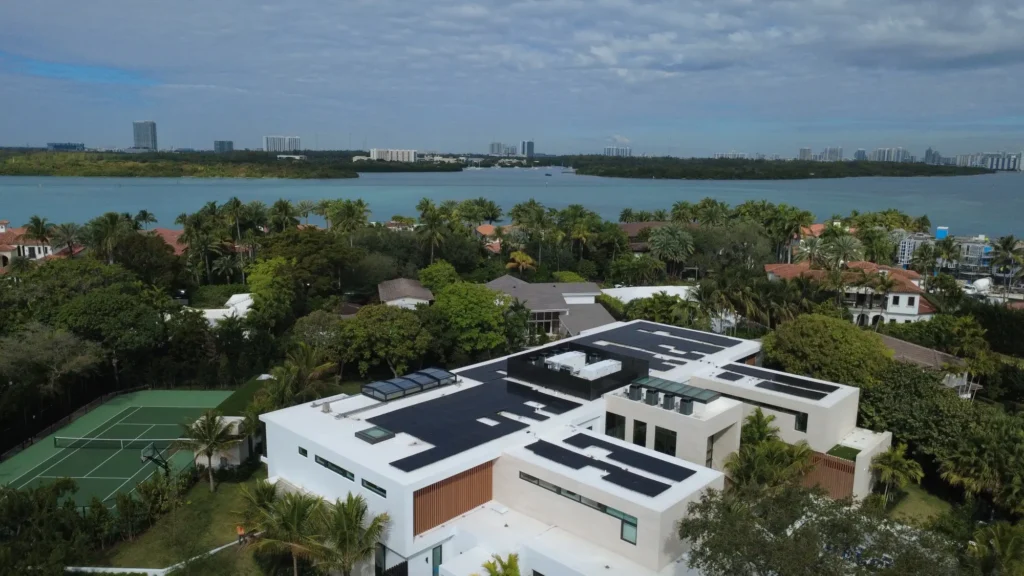
Hurricane Season 2026: How to Prepare Your Florida Solar and Battery System Short answer: when the grid goes down in a hurricane, a standard grid-tied solar system shuts itself off — it will not power your home during the outage unless it is paired with a battery that is designed for backup. That surprises a lot of Florida homeowners, and hurricane season is the wrong time to find it out. The good news: preparing a solar (or solar-plus-battery) home for a storm is mostly a matter of knowing five things — how your system behaves when the grid fails, how the hardware is engineered for wind, what to do in the days before landfall, how to set a battery up so it is actually useful during the outage, and what to check before you switch everything back on afterward. This guide walks through each one, written for Florida homes and the 2026 season, which runs June 1 through November 30. What your solar system actually does when the grid goes down Every grid-tied solar system in Florida is required to disconnect automatically during an outage. The behavior is called anti-islanding: if utility power fails, your inverter senses the dead line and stops exporting within a fraction of a second. This is a safety requirement, not a defect — line crews working to restore your neighborhood cannot be exposed to power flowing backward from rooftops onto lines they believe are dead. What that means practically depends on what you own: Solar only (no battery): your system shuts down with the grid and stays down until utility power returns. Your panels are fine; they simply wait. When the grid comes back, the inverter runs its reconnect checks and resumes on its own — typically within a few minutes of stable power. Solar plus a backup-capable battery: the system disconnects from the grid, forms its own small island, and keeps a set of circuits running — refrigerator, internet, some lights, fans, and in a well-sized system some air conditioning. The panels recharge the battery each day, which is the difference between one night of backup and a week of it. Battery without backup wiring: some batteries are installed purely for rate management and are not wired to island. If you are not sure which kind you have, that is question one for your installer — long before a storm has a name. One more piece of required equipment worth knowing about: rapid shutdown. Modern Florida installations include a code-required way to de-energize the conductors on the roof, usually a labeled switch or breaker at the equipment wall. Know where yours is. First responders use it, and you may be asked about it after a storm. Will the panels stay on the roof? Florida solar arrays are engineered to the wind-load requirements of the Florida Building Code, and in the High-Velocity Hurricane Zone — Miami-Dade and Broward counties — both the products and the attachment details must carry approvals for some of the strictest wind standards in the country. Racking, attachments, and module choices are specified for your roof type and your site’s design wind speed, and the permit drawings are reviewed and inspected on exactly that basis. Properly installed modern racking is designed to stay on the roof in the same storms that strip shingles around it — and after recent Florida hurricanes, that is broadly what installers and insurers observed on code-compliant systems. We wrote a detailed engineering piece on how solar panels hold up in Florida hurricanes if you want the deeper dive on wind ratings, attachment spacing, and what actually fails in extreme events. Two honest caveats. First, no one can promise any roof system is stormproof in a direct major-hurricane strike; engineering standards manage risk, they do not eliminate it. Second, the array is only as strong as the roof under it — an aging roof deck is the weak link, which is one reason we talk homeowners out of putting new panels on a roof that is near the end of its life. Your pre-storm checklist (solar, with or without battery) When a storm enters the forecast cone, here is what we tell our own customers: Photograph and document the system now. Take clear photos of the array from the ground, the inverter, the battery, and your monitoring dashboard showing normal production. If you ever need an insurance claim, before-and-after documentation is the single most useful thing you can have. Confirm your monitoring login works. After a storm, production data is how you (and we) verify the system is healthy without anyone climbing on a roof. If you have never opened the app, do it this week. Do not cover the panels. Plywood, tarps, and straps do more harm than good — they become sails and projectiles. Panels are the most wind-rated part of your roof; leave them alone. Clear the yard, not the roof. Most storm damage to arrays comes from flying debris. Patio furniture, trampolines, and loose fencing are the threats worth your afternoon. Know your shutdown procedure — and when not to use it. Your inverter will disconnect itself when the grid fails. Shutting the system down manually ahead of time is generally only advised if your installer or manufacturer says so for your specific equipment, or if local officials order it. If you do shut down, know the restart order too (it is usually the reverse), and keep the manufacturer’s quick-start card with your storm documents. Save your installer’s contact and your system details — inverter model, battery model, install year — somewhere that does not depend on your Wi-Fi being up. If you have a battery: set it up to be useful before landfall A battery that enters a hurricane at 20% charge is a missed opportunity. In the day or two before expected impact: Switch to storm or backup-reserve mode. Most major battery platforms have a setting — names vary by manufacturer — that stops the battery from discharging for bill
Florida Net Metering in 2026: What Is Actually Changing (and What Is Not)
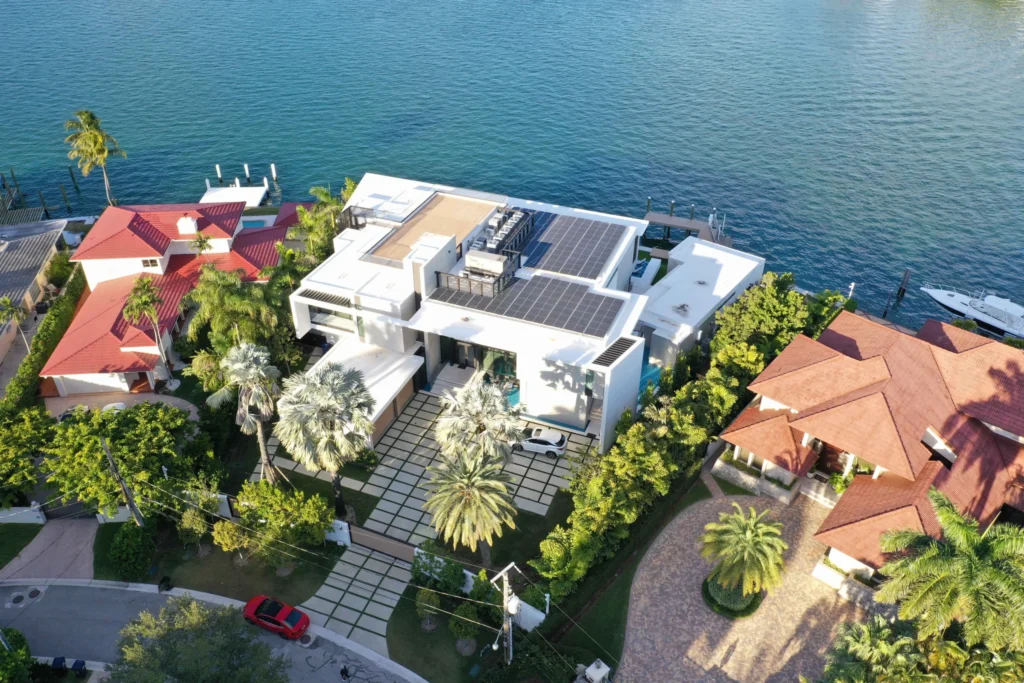
Florida Net Metering in 2026: What Is Actually Changing (and What Is Not) Short answer: for customers of Florida’s three big investor-owned utilities — FPL, Duke Energy Florida, and TECO — net metering has not changed. As of mid-2026 they still credit the solar power you export to the grid at the full retail rate, under the same Florida Public Service Commission rule that has governed net metering since 2008. What you may have heard about net metering “going away” comes from three real but frequently garbled stories: a 2022 bill that would have phased the credits down and was vetoed; an industry-wide expectation that some phase-down will eventually come, with no date or rule actually on the table; and a growing split between the big utilities and Florida’s municipal utilities and electric cooperatives, several of which already credit exports at less than retail. This article separates what is actually in force today from what is speculation, utility by utility, so you can make decisions on facts rather than on a salesperson’s countdown clock. How Florida net metering works today Net metering is the billing arrangement that makes rooftop solar economics work in Florida. When your panels produce more than your house is using — a sunny afternoon while you are at work — the surplus flows to the grid and your meter records the export. When you pull power back at night, the exported kilowatt-hours are credited against what you consume. For Florida’s investor-owned utilities, the framework comes from a Florida Public Service Commission rule adopted in 2008. The pieces that matter to a homeowner: Full retail credit, kilowatt-hour for kilowatt-hour. A kWh you export offsets a kWh you buy, at the same energy rate you would have paid. This one-for-one treatment is the backbone of the arrangement. Monthly rollover. If you export more than you use in a billing month, the excess credits roll forward to the next month rather than disappearing. Annual true-up. Once a year, any credits still unused are paid out — but at the utility’s much lower avoided-cost rate, not retail. Practically, this is why systems are sized to your actual usage rather than as large as the roof allows: surplus beyond your annual consumption is worth far less per kWh. Standard interconnection. The rule also standardizes how residential-scale systems connect: an application to your utility, an inspection, and a bidirectional meter, with requirements tiered by system size. If you are with FPL, our FPL net metering guide walks through that utility’s specific application and billing mechanics; TECO customers can find the same detail in our TECO net metering guide. Duke Energy Florida follows the same PSC framework. What is NOT changing in 2026 Three things remain exactly as they were, and each one gets misreported regularly: 1. Full-retail net metering at FPL, Duke Energy Florida, and TECO. All three continue to credit residential solar exports at the full retail rate. No filed rule change, no approved tariff revision, and no legislation currently in force alters that for these utilities as of mid-2026. 2. The 2008 PSC rule itself. The rule that requires investor-owned utilities to offer net metering to customer-owned renewable systems is still in force, unchanged. 3. Florida’s state-level solar fundamentals. The state sales-tax exemption on residential solar equipment and the property-tax exclusion for the value a renewable-energy system adds to your home both remain in place. Neither has anything to do with net metering, but they are frequently swept into the same “solar incentives are ending” rumor, so it is worth saying plainly: they are intact. What actually did change recently The genuine changes in the last few years are federal and local — not the IOU net-metering rules. The federal residential tax credit expired. The federal residential clean energy credit for homeowner-purchased systems was terminated for expenditures made after December 31, 2025. That changed the purchase economics of solar significantly — but it changed nothing about how your utility credits your exports. We covered the post-expiration math in detail in our 2026 solar economics guide. Several municipal utilities and co-ops moved away from full retail. Florida’s municipal utilities and electric cooperatives are not bound by the PSC’s net-metering rule, and some have adopted their own export-credit policies. JEA in Jacksonville credits exports for newer solar customers at a rate below retail, as we explain in our JEA guide; OUC in Orlando likewise applies reduced export credits to customers who enrolled after its policy change — details in our OUC guide. If your power comes from a municipal utility or a co-op, the single most important number in your solar analysis is the export-credit rate on your utility’s current tariff sheet — not a statewide generalization. The HB 741 story: what almost happened in 2022 Much of the “net metering is ending” narrative traces back to one bill. In 2022 the Florida Legislature passed House Bill 741, which would have stepped residential export credits down from full retail toward the utilities’ avoided cost over a period of years. Governor DeSantis vetoed it, citing — among other things — the cost pressure on households at a time of high inflation. The veto left the 2008 rule fully intact. Two details of that episode still matter for 2026 decisions: Even the phase-down bill grandfathered existing customers. HB 741 as passed would have let customers who already had solar keep their existing crediting terms for 20 years. Reducing credits for systems already interconnected was not on the table even in the legislation the industry considered hostile. No successor bill has become law. Net-metering revisions have been discussed in Tallahassee in the sessions since, but as of mid-2026 nothing has passed, and no PSC rulemaking has set a phase-down schedule or date. Is a phase-down coming? An honest reading Probably eventually — and anyone who claims to know when is guessing. Here is the honest version of the outlook: Utilities in Florida and nationally have argued for years that full-retail crediting shifts fixed grid
Is Solar Still Worth It in Florida in 2026, Now That the 30% Federal Tax Credit Is Gone?
Is Solar Still Worth It in Florida in 2026, Now That the 30% Federal Tax Credit Is Gone? Short answer: yes, solar can still be worth it in Florida in 2026 — but the math has changed, and anyone quoting you a “30% federal tax credit” on a home solar purchase is working from stale information. The federal residential clean energy credit (Internal Revenue Code §25D) was terminated for expenditures made after December 31, 2025. What has not changed: Florida still charges no sales tax on residential solar equipment, your property taxes do not go up when panels add value to your home, and Florida’s largest utilities — FPL, Duke Energy Florida, and TECO — still credit the solar power you export at the full retail rate today. Add one of the strongest solar resources in the continental United States and hardware prices that are far lower than a decade ago, and the honest 2026 answer is: it depends on your utility, your electric usage, your roof, and how long you plan to stay in the home. For some Florida households the numbers still work clearly; for others they no longer do. This article walks through exactly what expired, what survived, and how to run the math for your own house — without the marketing gloss. What exactly expired on December 31, 2025 The federal incentive most homeowners knew about was the residential clean energy credit under Section 25D of the tax code — commonly called “the 30% solar tax credit.” Under the One Big Beautiful Bill Act, signed into law on July 4, 2025, that credit was terminated for residential expenditures made after December 31, 2025. In practical terms: if you are a homeowner buying a solar system outright or with a loan in 2026, there is no federal tax credit on that purchase. This is not a phase-down or a reduced percentage — for homeowner-purchased residential systems, the credit is gone. Two things to watch for as a Florida consumer: Outdated sales pitches. Plenty of websites, ads, and even AI chatbot answers still repeat the 30% figure. If a salesperson builds a 2026 quote around a federal credit you will not receive, that is a red flag about everything else in the quote. The business credit is a different animal. A separate federal credit for businesses (Section 48E) continues to exist for commercial and certain third-party-owned systems, with its own eligibility rules and construction deadlines. What did NOT change for Florida homeowners The federal credit was never the whole story in Florida. Three state-level fundamentals are still in place in 2026: 1. No Florida sales tax on solar Solar energy systems are exempt from Florida’s 6% state sales tax. On a typical residential system this is a four-figure saving that comes off the price automatically — no forms, no waiting for tax season. 2. No property-tax penalty for going solar Florida law excludes 100% of the value a residential renewable-energy device adds to your home from your property-tax assessment. Your panels can raise what your home is worth without raising what you pay the county each year. 3. Full-retail net metering at the big investor-owned utilities — today FPL, Duke Energy Florida, and TECO still credit the kilowatt-hours you export to the grid at the full retail rate. That one-for-one credit is the backbone of solar economics in Florida: it means a kilowatt-hour your system sends out in the afternoon offsets a kilowatt-hour you pull back at night. Two honest caveats belong next to that sentence. First, a phase-down of these credit rates has been discussed for years and is widely expected at some point — but as of mid-2026 no date is set and no rule has been finalized. (The 2022 legislation that would have changed net metering, HB 741, was vetoed by Governor DeSantis.) Second, several municipal utilities and electric cooperatives already credit exports at less than full retail — JEA in Jacksonville and OUC’s newer-customer export rates in Orlando are examples — so the specific utility that serves your address matters. We keep utility-by-utility details current in our FPL net metering guide and the rest of our Florida utility series. One planning implication is worth spelling out: historically, when net-metering rules change, existing solar customers have been grandfathered under the rules in place when they interconnected. Nobody can promise that, but it is one reason some homeowners prefer to interconnect under today’s full-retail rules rather than wait for a rule change to be announced. How to actually run the 2026 math Without the federal credit, roughly 30% of the effective discount homeowners enjoyed in 2025 is off the table. That does not make solar a bad deal — it makes lazy math a bad deal. Here is the framework we use when we model a system for a Florida home, and the same one you should demand from any installer: Start with your actual usage, not an average. Twelve months of kilowatt-hour history from your utility bill is the foundation. A system sized to a “typical Florida home” instead of your home will miss on both cost and savings. Get the real net price. Gross system cost, minus Florida’s sales-tax exemption, with no federal credit line item. If a 2026 quote shows a federal credit for a homeowner purchase, stop and ask why. Model production against your utility’s actual tariff. Full-retail net metering at FPL, Duke, or TECO is a different economic picture than a municipal utility crediting exports below retail. The export rate determines how much a south- or west-facing array is really worth. Count the financing honestly. If you finance, the interest cost belongs in the payback math. A low advertised monthly payment with a large dealer fee baked into the principal is not a low cost. Match the horizon to your plans. Payback periods are longer without the federal credit. If you expect to sell the house in two years, the calculation leans on how much value the system adds at
Achieve True Energy Independence with Goldin Solar’s Integrated Solar Energy Systems
How Spring Pollen Season Affects Solar Panels Near Palm Beach & Ft Lauderdale
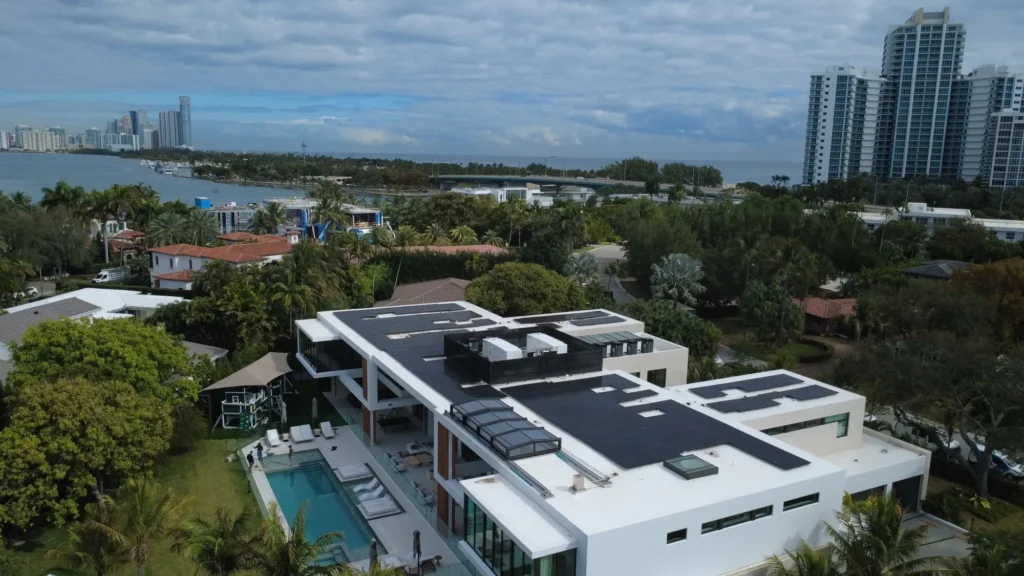
Can Solar Panels Survive Hurricanes in Florida?