
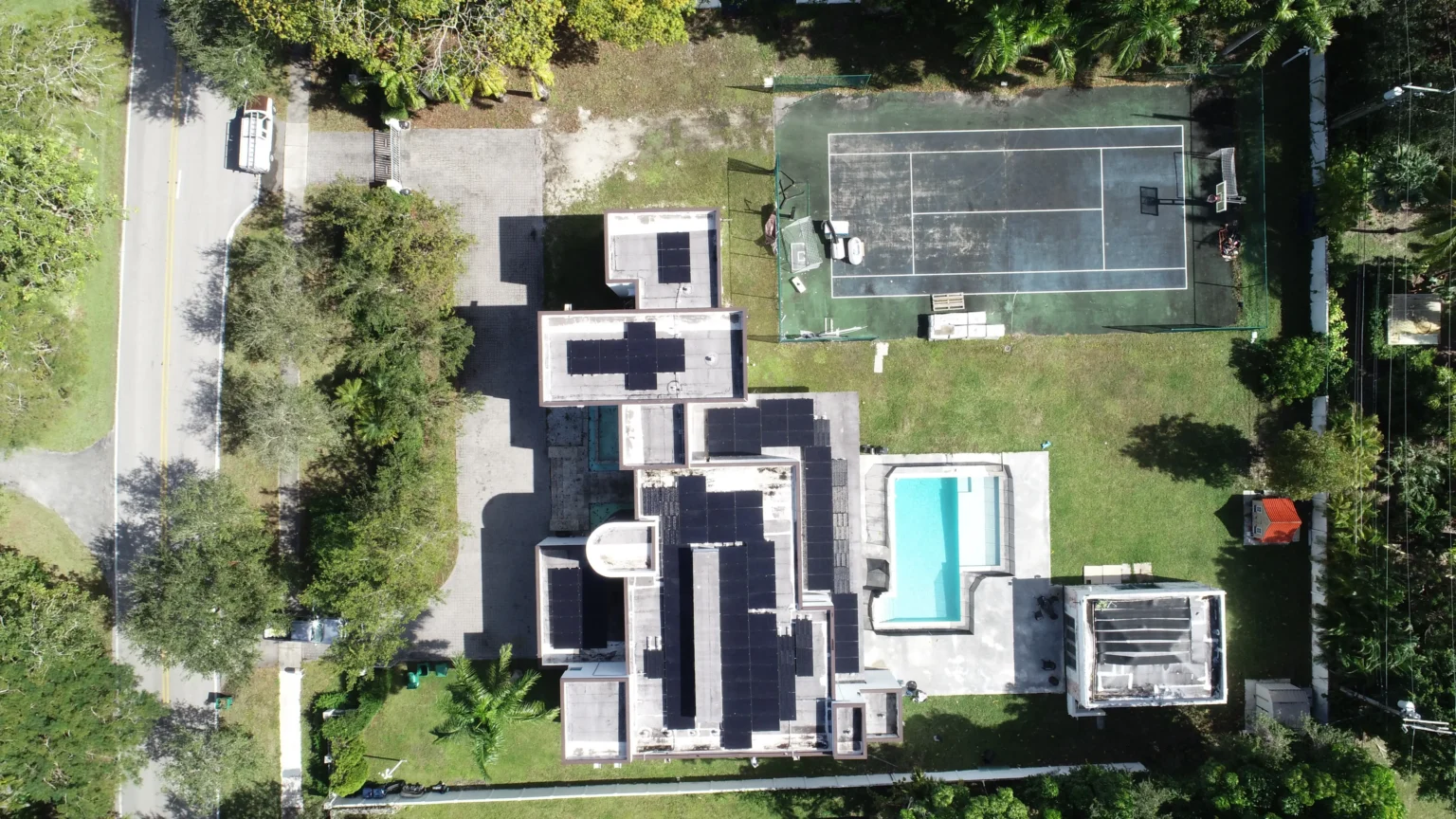
When the grid goes down in a hurricane, a standard grid-tied solar system shuts itself off — it will not power your home during the outage unless it is paired with a battery that is designed for backup.
That surprises a lot of Florida homeowners, and hurricane season is the wrong time to find it out. The good news: preparing a solar (or solar-plus-battery) home for a storm is mostly a matter of knowing five things — how your system behaves when the grid fails, how the hardware is engineered for wind, what to do in the days before landfall, how to set a battery up so it is actually useful during the outage, and what to check before you switch everything back on afterward. This guide walks through each one, written for Florida homes and the 2026 season, which runs June 1 through November 30.
Every grid-tied solar system in Florida is required to disconnect automatically during an outage. The behavior is called anti-islanding: if utility power fails, your inverter senses the dead line and stops exporting within a fraction of a second. This is a safety requirement, not a defect — line crews working to restore your neighborhood cannot be exposed to power flowing backward from rooftops onto lines they believe are dead.
What that means practically depends on what you own:
One more piece of required equipment worth knowing about: rapid shutdown. Modern Florida installations include a code-required way to de-energize the conductors on the roof, usually a labeled switch or breaker at the equipment wall. Know where yours is. First responders use it, and you may be asked about it after a storm.
Florida solar arrays are engineered to the wind-load requirements of the Florida Building Code, and in the High-Velocity Hurricane Zone — Miami-Dade and Broward counties — both the products and the attachment details must carry approvals for some of the strictest wind standards in the country. Racking, attachments, and module choices are specified for your roof type and your site’s design wind speed, and the permit drawings are reviewed and inspected on exactly that basis. Properly installed modern racking is designed to stay on the roof in the same storms that strip shingles around it — and after recent Florida hurricanes, that is broadly what installers and insurers observed on code-compliant systems. We wrote a detailed engineering piece on how solar panels hold up in Florida hurricanes if you want the deeper dive on wind ratings, attachment spacing, and what actually fails in extreme events.
Two honest caveats. First, no one can promise any roof system is stormproof in a direct major-hurricane strike; engineering standards manage risk, they do not eliminate it. Second, the array is only as strong as the roof under it — an aging roof deck is the weak link, which is one reason we talk homeowners out of putting new panels on a roof that is near the end of its life.
When a storm enters the forecast cone, here is what we tell our own customers:
A battery that enters a hurricane at 20% charge is a missed opportunity. In the day or two before expected impact:

Once conditions are safe outdoors:
We get asked this every June. A portable or standby generator produces power as long as it has fuel; fuel is exactly what gets scarce after a major Florida storm, and generators bring noise, exhaust, and maintenance. A solar-charged battery is silent, fuel-independent, and refills itself daily — but its output and daily energy are finite, and adding one is a bigger upfront decision than buying a portable generator. Plenty of well-prepared Florida homes run both: battery for continuous essentials, small generator as a backstop for peak loads. The right answer depends on your outage history, your medical and work-from-home needs, and your budget — it is a sizing conversation, not a slogan. One 2026 note on the economics: the federal residential clean energy credit that formerly applied to homeowner-purchased batteries expired for expenditures made after December 31, 2025, so a battery quote this season should stand on its own numbers — we covered what that change means in our 2026 solar economics guide.
Should I turn my solar system off before a hurricane? Usually no — it disconnects itself if the grid fails. Manual shutdown ahead of a storm is equipment-specific advice; follow your installer’s or manufacturer’s guidance for your hardware rather than a generic rule.
Do I need to remove my panels before a storm? No. Removal creates roof penetration and handling risks far in excess of the wind risk on a code-compliant installation, and it cannot be done responsibly on hurricane-warning timelines.
Will my panels keep working if it is cloudy after the storm? Yes, at reduced output. Production drops under heavy overcast and recovers as skies clear — which is why battery planning assumes partial recharge for the first day or two.
Does insurance cover hurricane damage to solar? Rooftop systems are typically part of the dwelling under a homeowner’s policy, but deductibles and specifics vary — confirm with your insurance agent before the season peaks, not after a claim.
For more Florida-specific answers — permits, HOAs, costs, batteries — see our Florida Solar FAQ.
Hurricane preparedness for a solar home is not complicated, but it is specific: know that grid-tied solar shuts down without a battery, trust the engineering instead of tarps and plywood, spend your prep time on documentation and debris, put a battery in storm mode while the storm is still offshore, and inspect from the ground before restarting anything that got wet. If you want backup power to be part of your plan before the next cone shows up on the forecast map — or you want us to review how your existing system is set up for the season — we will look at your actual house, your actual loads, and give you a straight answer.
Get a free storm-readiness and solar assessment for your Florida home.
About the author: Joe Cataldo is the CEO of Goldin Solar, LLC, a Vero Beach, Florida–based solar installation company serving homeowners and businesses across the state. He holds a Florida Certified Solar Contractor license (CVC57300) and a Florida Certified Electrical Contractor license (EC13013985), both issued by the Florida Department of Business and Professional Regulation. Joe personally oversees system design standards and code compliance on Goldin Solar projects.