
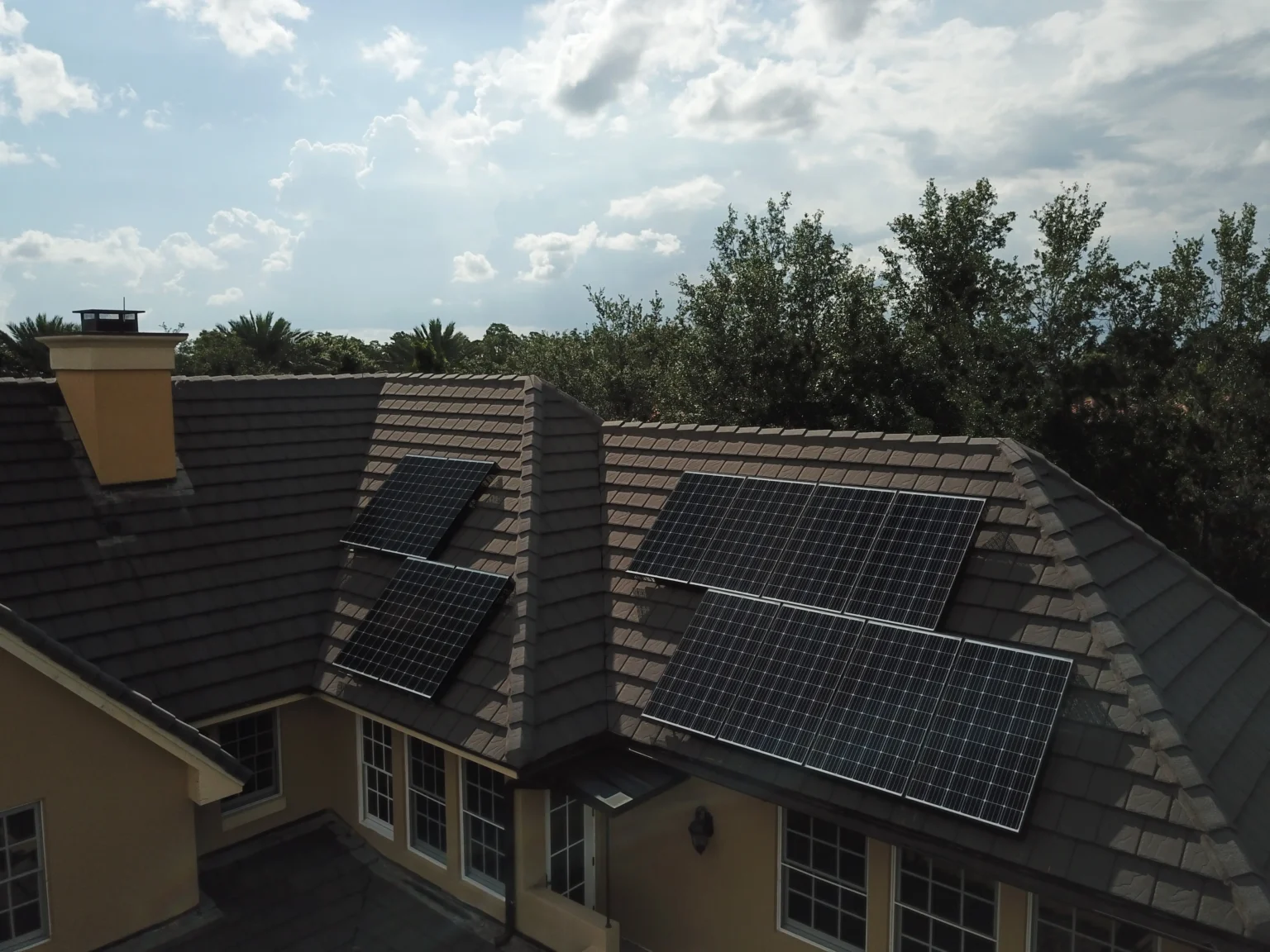
The roof comes first — on the calendar and in the design conversation.
Solar panels routinely produce power for a quarter-century, and the racking that holds them is engineered to stay put through Florida wind. The roof covering underneath is the only part of the assembly that may not last that long. If your roof has plenty of life left, install with confidence. If it is nearing the end of its service life, replace it first — or, better, plan the reroof and the solar installation as one coordinated project. What you want to avoid is the expensive middle path: putting a new solar array on a roof that will need replacement a few years later, then paying a crew to remove the panels, waiting out the reroof, and paying again to reinstall and recommission the system. This article walks through how to judge the timing honestly, what makes the question sharper in Florida than almost anywhere else, and how a coordinated roof-plus-solar project actually runs.
A modern solar module is a slow-aging piece of hardware. Manufacturers commonly back panels with production warranties running twenty-five years, and well-built systems keep producing beyond the warranty paper. Inverters and racking have their own long service lives. Nothing about a properly engineered array needs attention on anything like a shingle-roof schedule.
Florida asphalt shingles live a harder life than the national brochures suggest. Relentless ultraviolet exposure, summer heat, driving rain, and the occasional named storm age a shingle roof faster here than in milder climates. Metal and tile roofs last considerably longer, which is one reason the timing question lands differently depending on what is over your head.
Put those two lifespans side by side and the design rule writes itself: the roof under a solar array should have at least as much life left as the array needs. When it does not, the mismatch eventually presents a bill — the cost of taking the system down and putting it back up in the middle of its productive life.
Homeowners sometimes assume a roofer can simply work around the panels. They cannot. A reroof under an existing array means:
None of that is exotic, and reputable companies do it cleanly every week. But it is a real project with real mobilization, and while the panels sit on the ground they produce nothing. It is exactly the scenario a little planning at design time avoids.
You do not need to guess. Here is the framework we use when we evaluate a roof during a solar site assessment:
An assessment that skips the roof conversation is not a complete solar assessment. If an installer quotes an array for a roof that plainly needs replacement soon and never mentions it, that tells you something about how the rest of the project will be handled.
When a roof is genuinely near the end of its life, combining the reroof and the solar installation into one coordinated project is usually the cleanest path, for reasons that compound:
The practical objection is cash flow: a reroof and a solar system together is a bigger project than either alone. That is real, and the honest answer is that the combined project is not the right call for every budget in every year. But the comparison that matters is not “solar now” versus “roof plus solar now.” It is “roof plus solar, coordinated once” versus “solar now, reroof in a few years, plus a removal and reinstallation nobody budgeted for.” Priced over the life of the system, coordination usually wins.
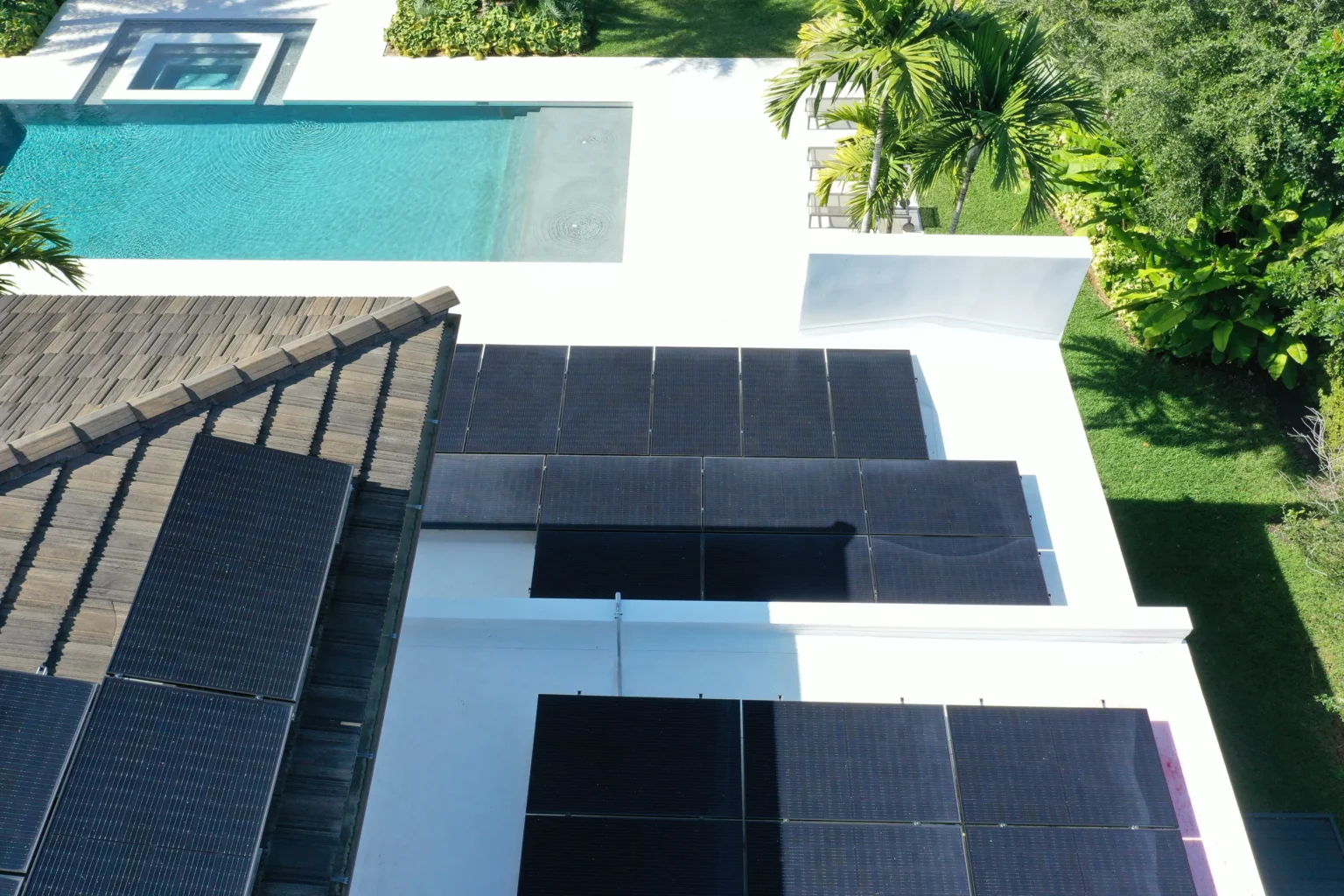
If your roof went on in the last several years and is in good condition, the sequencing problem largely disappears — your roof and a new array can age out together, and the right move is simply to have the roof condition documented as part of the solar site assessment. Two details still deserve attention:
Two forces make roof-and-solar sequencing a bigger deal in Florida than in most states.
The building code takes wind seriously, and so does a proper installation. Florida solar arrays are engineered to the Florida Building Code’s wind-load requirements, with stricter approvals still in the High-Velocity Hurricane Zone counties. Attachment engineering is only as strong as the roof structure and covering it ties into — another reason the roof conversation belongs at the start of the solar conversation, not the end. We covered how arrays, batteries, and Florida storms interact in our hurricane season preparation guide.
Insurance pressure keeps roof age on the agenda. Florida’s property-insurance market has made roof age and condition a live underwriting topic, and homeowners feel it at every renewal. A solar project is a natural moment to get ahead of that: documenting a sound roof — or replacing a marginal one — serves both the insurance file and the solar design.
Will solar panels damage my roof? A properly engineered and properly flashed installation does not harm a sound roof, and the panels themselves shield the covering beneath them from sun and weather. The qualifier “properly” is doing real work in that sentence — attachment and flashing workmanship is the whole game, which is why it belongs in writing.
My roof is about halfway through its life. Should I wait? This is the genuinely hard case, and the honest answer is that it depends on the covering, its condition, your insurer’s posture, and how long you will own the home. Sometimes the right answer is to install now and accept a planned removal and reinstallation later; sometimes it is to reroof first. What we can promise is a straight answer from an actual roof evaluation rather than a reflexive yes.
Can solar go on metal or tile roofs? Yes. Attachment methods differ by covering — standing-seam metal is particularly solar-friendly because many systems clamp to the seams without penetrations — and both metal and tile generally offer longer service lives than shingle, which eases the timing question.
Does a reroof change my net metering or interconnection status? A temporary removal and reinstallation of an existing system is routine, but tell your installer and check how your utility treats the interconnection before work starts. If you are weighing the larger question of when to interconnect at all, our FPL net metering guide explains how today’s rules credit solar production.
Is solar still worth doing at all if I also have to pay for a roof? That is really two budget decisions sharing one calendar, and the solar half deserves its own honest math — we walked through the full 2026 economics in our guide to whether solar is still worth it in Florida. For the broader questions — permits, insurance, hurricanes, batteries — start with our Florida Solar FAQ.
Solar rewards owners who think in decades, and the roof is where that thinking starts. Get the roof evaluated honestly, sequence the projects deliberately, and you buy yourself a clean quarter-century of production with no expensive surprises in the middle. If the roof is sound, build on it. If it is marginal, fix it first — ideally as one coordinated project with the array designed into the new covering from day one. We evaluate the roof as part of every Goldin Solar site assessment, we coordinate with roofing contractors on combined projects, and we will tell you plainly if the right answer is “roof first, solar second.”
Get a free solar assessment — roof evaluation included.

About the author: Joe Cataldo is the CEO of Goldin Solar, LLC, a Vero Beach, Florida–based solar installation company serving homeowners and businesses across the state. He holds a Florida Certified Solar Contractor license (CVC57300) and a Florida Certified Electrical Contractor license (EC13013985), both issued by the Florida Department of Business and Professional Regulation. Joe personally oversees system design standards and code compliance on Goldin Solar projects.