
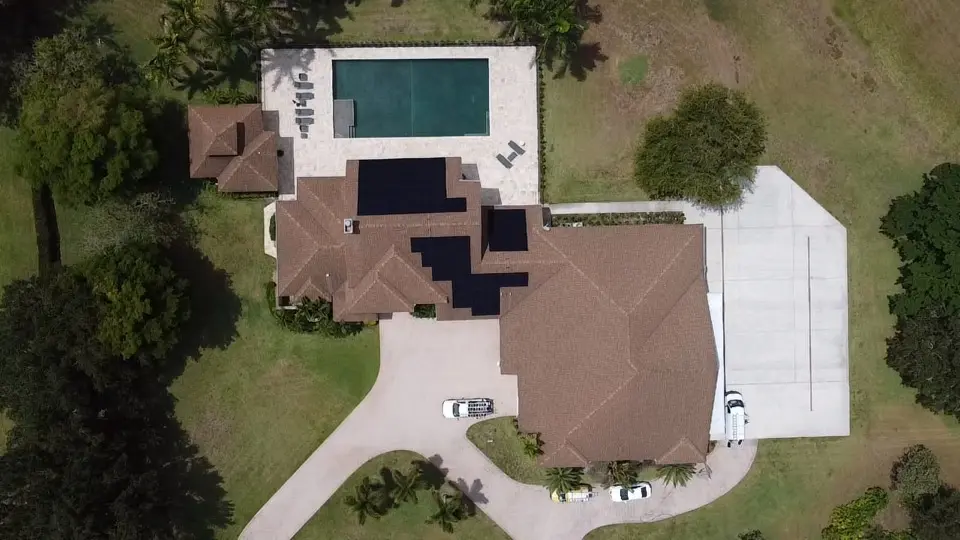
There is no single number that fits every home, but every residential solar project in Brevard County and on the Treasure Coast moves through the same steps: a site survey, system design, the building permit, installation, the inspection, and the utility’s final approval to turn the system on. The installation itself is usually the shortest step. Most of the waiting comes from paperwork, mainly the permit review and the utility approval, and from anything that needs to happen first, such as HOA approval or a new roof.
This guide walks through each step, explains which local offices and utilities are involved, lists the things that most often slow a project down, and covers what you can do to keep yours moving. Every home is different, so treat any schedule an installer gives you as an estimate, not a promise.
Homeowners often ask for a simple answer, and a good installer will give you an estimate for your home. But the honest answer is that the schedule depends on a few things nobody fully controls: how busy your building department is that month, whether your plans need corrections, whether your HOA has to review the project, the condition of your roof and electrical panel, and how quickly the utility processes its paperwork. An installer who quotes a firm date before any of that is known is guessing.
What an installer can control is how quickly and carefully each step is handled on their side. That is worth asking about, and we cover the questions to ask near the end of this guide.
Two kinds of offices touch every project: the building department that issues your permit and the utility that connects your system to the grid.
For local detail, see our pages on solar panels in Melbourne, solar panels in Vero Beach, and solar across the Treasure Coast, along with our permit guides for Port St. Lucie and Stuart.
Most projects start with a conversation about your goals and a look at your electric bills. Many installers can sketch a preliminary design from satellite imagery before visiting the home. This step moves as quickly as you want it to. Take the time you need to compare proposals and ask questions; a good installer will not pressure you to sign on the spot.
Before the design is final, someone visits the home. The site survey usually covers:
The survey is often where surprises show up, such as a roof that is near the end of its life or a panel that needs work. It is better to learn about those now than after the permit is filed. If your roof type is a question, our guide to metal, tile, and shingle roofs for Florida solar explains how each one affects the installation.
With the survey done, the installer finalizes the panel layout and prepares the permit plans. In Florida, those plans show the panel locations, how the system attaches to the roof, the wiring and electrical connections, and how the installation meets the Florida Building Code and the electrical code, including the wind-load requirements that apply everywhere in the state. Many projects also need plans or letters signed and sealed by a Florida-licensed engineer.
The coasts here are not part of the High-Velocity Hurricane Zone, which covers Miami-Dade and Broward counties, but wind design still matters. Homes close to the ocean or the Indian River Lagoon can face stricter wind requirements than homes farther inland, and the engineering has to account for that.
If your home is in a community with a homeowners association, the HOA may need to review the project. Florida law limits how far an association can go in blocking solar, but associations can still ask for an application and have some say over where panels are placed, within limits. Starting the HOA application early, at the same time as the design work, can keep it from holding up the permit. Our article on whether your HOA can stop you from going solar in Florida explains what the law says.
The installer submits the plans to your building department. A plan reviewer checks them and either approves the permit or sends back comments asking for corrections. Corrections are common and are not a sign of a problem with your project; they simply add another round of review. Some departments move quickly, and some have a backlog, especially after a busy stretch of construction or a storm.
Our post on how long Florida solar permits really take goes into much more detail about what affects permit review, including the most common reasons plans get sent back.
Separately from the permit, the installer applies to your utility to connect the system to the grid. For FPL customers, this is FPL’s interconnection and net metering application. The utility reviews the system details and the paperwork. Depending on the utility and the size of the system, this can run alongside the permit review, or some parts may happen after the inspection. You can read how FPL credits the extra power your system sends to the grid on our FPL net metering page.

Once the permit is approved, the installer orders or reserves the equipment and puts the job on the crew schedule. Panels, inverters, and mounting hardware are usually available, though specific products can sometimes be back-ordered. If you chose a battery, it may need its own lead time. Ask your installer whether the equipment for your system is in stock or on order.
For most homes, installation is the shortest step in the whole project. A typical residential crew mounts the racking, installs the panels, runs the wiring, and connects the inverter and other equipment. Larger systems, tile roofs, batteries, and electrical panel upgrades add time. Weather plays a part too: crews do not work on roofs in lightning or high winds, and Florida’s summer afternoon thunderstorms can cut a workday short.
You usually do not need to be home for the whole installation, but the crew will need access to your electrical panel, garage, or attic at some points. Your installer should tell you ahead of time what access is needed.
After installation, the building department inspects the work against the approved plans. Depending on the department, there may be one final inspection or separate inspections for the roof attachments and the electrical work. If the inspector finds something that needs to be fixed, the installer corrects it and the inspector comes back. Our guide to what the inspector checks on a Florida solar installation explains what they look for.
Once the inspection passes, the building department reports the result, and the utility completes its side. For FPL customers, that usually includes setting up your account for net metering, which may involve a meter change. The utility then gives permission to operate, often called PTO. Do not turn your system on until you have that permission, even if it is fully installed and inspected. Running the system early can cause problems with the utility and with your bill. After you start, our article on how solar shows up on your electric bill in Florida explains how to read your first statements.
What takes the longest? Usually the permit review and the utility approval, not the installation itself.
Can I speed up the permit? Not directly, but a complete, accurate submittal and quick answers to any corrections help avoid extra rounds of review.
Can I turn my system on once it is installed? No. Wait for the inspection to pass and for the utility to give permission to operate.
Does hurricane season affect the schedule? It can. Storms and their aftermath can delay crews, inspections, and utility work.
Will my installer give me an exact date? A good installer will give you a realistic estimate and explain what could change it. Be cautious about firm promises made before the permit and utility steps are underway.
For more Florida-specific answers, see our Florida Solar FAQ.
In Brevard County and on the Treasure Coast, going solar follows the same path every time: survey, design, permit, installation, inspection, and utility approval. The installation is the quick part. The steps that take the most time are the ones that involve review by someone else, so a careful installer who submits complete paperwork and follows up quickly makes a real difference. Goldin Solar is based in Vero Beach and works with building departments and utilities up and down this coast. If you would like a Florida-licensed team to look at your home and give you an honest estimate, we are happy to help.
Get a free, no-pressure solar assessment for your Florida home.
About the author: Joe Cataldo is the CEO of Goldin Solar, LLC, a Vero Beach, Florida–based solar installation company serving homeowners and businesses across the state. He holds a Florida Certified Solar Contractor license (CVC57300) and a Florida Certified Electrical Contractor license (EC13013985), both issued by the Florida Department of Business and Professional Regulation. Joe personally oversees system design standards and code compliance on Goldin Solar projects.