
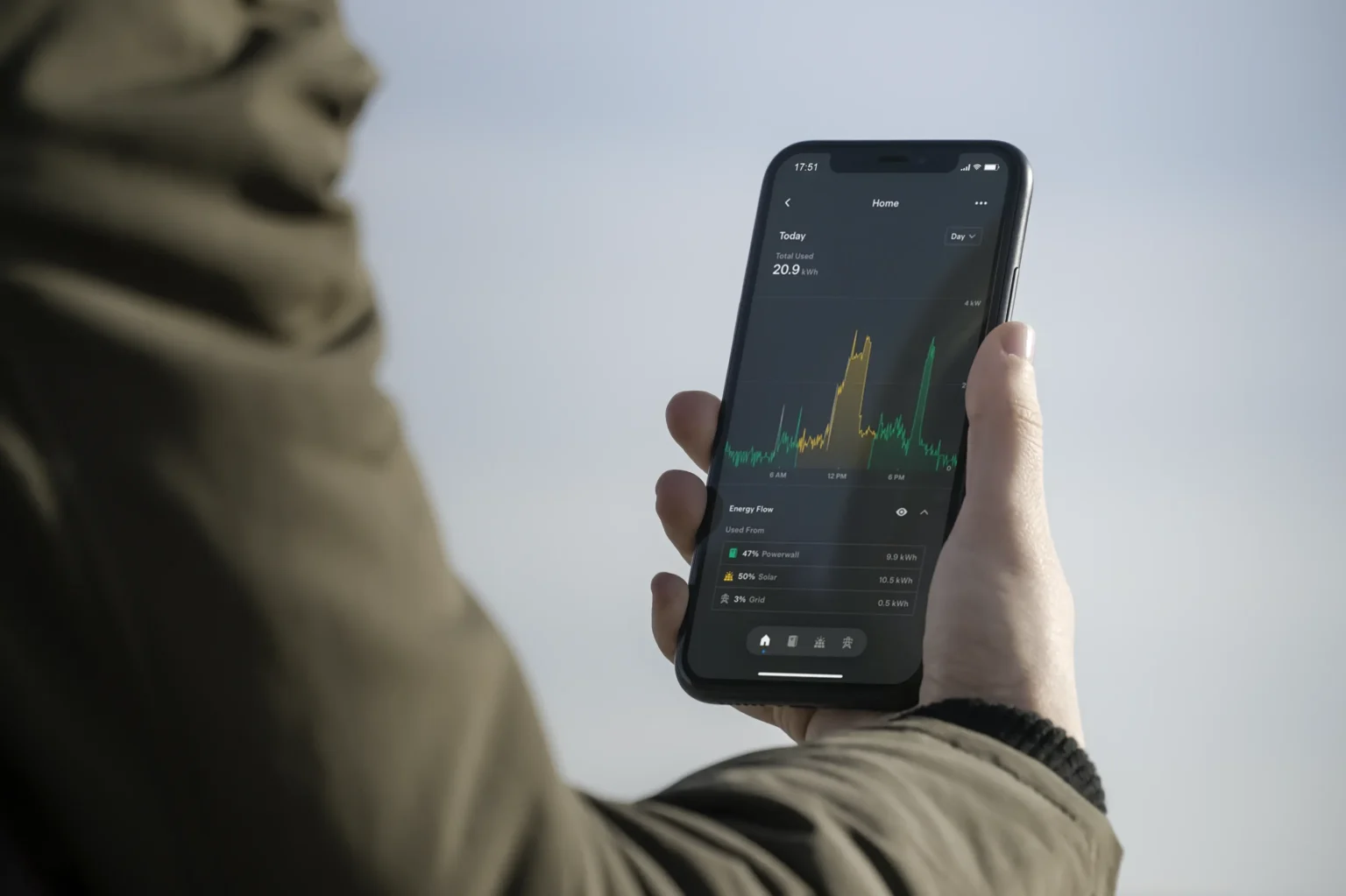
Yes — a battery can almost always be added to an existing grid-tied solar system in Florida, and it is one of the most common projects we quote.
The right way to do it depends on the equipment already on your wall: an AC-coupled battery installs alongside nearly any existing solar inverter without disturbing the original system, while a hybrid retrofit replaces an aging inverter with one device that manages both panels and storage. Homeowners with no solar at all can go battery-first and add panels later. In Florida the motivation is rarely complicated: a standard grid-tied solar system shuts itself down during a power outage, and a battery is the piece of hardware that turns your array into genuine backup power for the days after a storm. This article walks through the three retrofit paths, what whole-home versus essential-loads backup really means, how to size a retrofit honestly, and the Florida-specific details — heat, wind, flood zones, permits, and interconnection paperwork — that decide how well the project goes.
Start with the misconception we clear up on almost every retrofit call. A grid-tied solar system without storage is required to shut down when the grid goes down. That behavior — called anti-islanding — is a safety requirement, not a defect: it keeps your panels from energizing lines that utility crews are working on. So the homeowner who watched a week of post-hurricane sunshine fall on a silent array is not describing a broken system. They are describing a system that was never designed to island.
A battery retrofit changes what the system fundamentally is. With storage and the right islanding hardware, the home separates from the grid automatically during an outage and runs as its own small grid: the battery carries the house through the night, and the panels recharge the battery every day the sun comes up. That daily recharge is the difference between backup measured in hours and backup that can carry a household through an extended restoration. We covered the storm-behavior side of this in detail in our hurricane season preparation guide.
Nearly every battery retrofit lands in one of three architectures, and which one fits is mostly a question about your existing inverter.
An AC-coupled battery brings its own built-in inverter and connects on the alternating-current side of your electrical system. Your existing solar inverter keeps doing exactly what it does today; the battery system sits beside it and manages charging, discharging, and the switchover during an outage. Because the two systems talk over the house wiring rather than sharing electronics, AC coupling works with virtually any existing grid-tied array, whether it uses a string inverter or microinverters. This is the least disruptive path and the one most Florida retrofits take.
The honest footnote: energy that flows from panels to battery to house passes through more conversion steps than it would in a system designed around a single hybrid inverter, and each conversion loses a little. For a resilience-driven Florida retrofit this is a footnote, not a dealbreaker — but a straight answer about it belongs in any quote conversation.
Solar inverters do not last as long as panels. If your string inverter is deep into its service life or already showing faults, replacing it with a hybrid inverter — one device that manages panels and battery together — can make more sense than bolting a second system beside a first one that is on its way out. The project is more involved, because the original solar system is being rewired through new equipment, but the result is a cleaner single-brain system. The decision is rarely ideological: it usually comes down to the age and warranty status of what is on the wall today.
You do not need solar to benefit from storage. A standalone battery charges from the grid, watches for the outage, and carries the essential loads when it comes. For households that are not ready for a full array — roof timing, budget cycles, or an upcoming move — a battery-first installation delivers the resilience piece now. The design detail that matters: choose equipment with a clear path to adding panels later, so the eventual array plugs into the platform you already own instead of forcing a redesign.
The single most important expectation-setting conversation in a battery retrofit is what, exactly, stays on. There are two basic designs:
Neither design is the wrong answer. What is wrong is a proposal that never asks the question. A homeowner who expects the air conditioner to run all night on a single small battery is going to be unhappy with an installation that was, on paper, executed perfectly.
Battery sizing follows the same discipline we apply to solar sizing for high-usage Florida homes: start from your actual loads, not from a brochure. The questions that drive the answer:
Modern home batteries are overwhelmingly lithium iron phosphate chemistry, which tolerates heat well and suits Florida service. Capacity, surge behavior, and stacking options differ by platform, and those specifics belong in a written proposal built on your numbers — not in a blog post generalizing about everyone’s house.

A battery retrofit in Florida is shaped by the same forces that shape everything else built here.
Heat and placement. Batteries prefer moderate temperatures. Manufacturers publish operating ranges, and sustained high heat is the enemy of both performance and longevity. In practice that means placement is a design decision, not an afterthought: a garage wall away from afternoon sun, a shaded north-facing exterior wall in an outdoor-rated enclosure, and honest airflow around the unit. A battery bolted to a west wall in full August sun is a design error you live with for years.
Wind and anchoring. Exterior equipment in Florida is installed to the Florida Building Code’s wind requirements, with the strictest standards in the High-Velocity Hurricane Zone counties. Wall-mounted and ground-mounted battery hardware gets anchored accordingly — the same engineering mindset that keeps arrays on roofs applies at ground level.
Flood zones. In surge-prone and flood-mapped areas, electrical equipment gets elevated. Where a battery can live — and how high — is exactly the kind of siting detail a local installer should be checking against your flood zone, not discovering at inspection.
Permits and inspection. A battery retrofit is permitted electrical work: plans, an electrical permit, and inspection, handled by your installer. Energy-storage installations also carry their own code requirements — siting, clearances, disconnects — that inspectors check closely. Timelines vary by jurisdiction the same way solar permits do; our guide to Florida solar permit timelines explains how that process actually runs county by county.
Utility paperwork. If you have an existing interconnection agreement for your solar system, adding storage typically means updating it. Utilities want an accurate picture of the equipment behind the meter, and the interconnection rules for storage are part of the same framework we describe in our FPL net metering guide. It is paperwork, not drama — but skipping it is how retrofits end up unwound later.
Floridians have solved outages with generators for decades, and the comparison deserves a straight treatment.
A standby generator runs as long as it has fuel, which makes it hard to beat for very long outages — and fuel is exactly its weakness. Gasoline and diesel must be stored, hauled, and found in a post-storm supply crunch; natural gas depends on service that usually stays up but is not guaranteed. Generators also announce themselves: noise, exhaust, and a maintenance schedule of oil, filters, and exercise cycles that must be kept up in peacetime for the machine to start in wartime.
A battery is silent, instant, and automatic — the switchover happens in a blink, with no cords and no fuel run. Paired with solar, it refuels itself every day the sun comes up, which is most Florida days, including most days after a storm passes. Its limit is capacity: a battery sized for essentials will not run a whole large house indefinitely on its own.
For some households — medical equipment that cannot tolerate any gap, very long rural restorations — a generator, or a battery-plus-generator design, remains the right answer. For most solar-owning Florida homes we assess, the battery retrofit wins on automation, silence, safety, and the fact that its fuel supply is bolted to the roof.
One more honest framing. In states where utilities credit exported solar power at low rates, batteries get pitched as a way to store your surplus instead of selling it cheap. Florida is not that market today: FPL, Duke Energy Florida, and TECO still credit exports at the full retail rate, which means the kilowatt-hour your array exports this afternoon already offsets the one you buy back tonight. A battery in Florida is therefore first and foremost a resilience purchase — backup power through outages — rather than a bill-arbitrage machine. If the export rules change someday, a home that already has storage is well positioned; but we size and sell batteries on what they do for you now, under the rules that exist now. The broader purchase math — what changed in the incentive landscape and how to run the numbers on your own house — is covered in our guide to whether solar is still worth it in Florida.
Can a battery really be added to any existing solar system? Nearly any grid-tied system can take an AC-coupled battery, because the battery brings its own electronics and does not disturb the original inverter. The genuine exceptions are rare and show up in a site assessment, not after a contract.
Will the battery run my central air conditioning? It depends on the design. Air conditioning is the largest load in a Florida home and its compressor startup surge is the hard part. Whole-home designs handle it with adequate capacity, surge-capable equipment, and sometimes a soft-start device; essential-loads designs usually choose to back the refrigerator and the fans instead. This is exactly the expectation-setting conversation to have in writing.
How long will a battery carry my house? The unsatisfying-but-true answer: it depends on what you keep running. An essentials-only plan with solar recharging the battery each day can ride out a multi-day restoration; a whole-home plan without solar draws down far faster. Anyone quoting runtimes without asking about your loads is guessing.
Do I need a permit and utility approval? Yes. A retrofit is permitted, inspected electrical work, and if you have an interconnection agreement it typically gets amended to reflect the storage. Your installer should handle both ends of that paperwork.
Garage or outside? Both are common. The decision weighs heat exposure, flood elevation, clearance requirements, and wall space — site specifics, in other words. What matters is that placement is engineered, not improvised.
Should I wait and do battery and solar together? If solar is genuinely on your horizon, a combined design is cleaner and avoids paying twice for overlapping electrical work. If solar is years away or not in the plan, battery-first with an expansion path is a legitimate design. For more Florida-specific questions — insurance, hurricanes, HOAs, costs — see our Florida Solar FAQ.
A battery retrofit is how an existing Florida solar array graduates from a bill-reduction tool into storm infrastructure — and for homes without solar, a battery-first design delivers the outage protection piece on its own. The architecture follows your existing equipment, the sizing follows your actual loads, and the installation details — heat, wind, flood elevation, permits, interconnection paperwork — follow Florida rules that a local installer should know cold. We design battery retrofits against your real usage data, tell you plainly what will and will not stay on, and put the answer in writing before anyone signs anything.
Get a free battery retrofit assessment for your Florida home.

About the author: Joe Cataldo is the CEO of Goldin Solar, LLC, a Vero Beach, Florida–based solar installation company serving homeowners and businesses across the state. He holds a Florida Certified Solar Contractor license (CVC57300) and a Florida Certified Electrical Contractor license (EC13013985), both issued by the Florida Department of Business and Professional Regulation. Joe personally oversees system design standards and code compliance on Goldin Solar projects.