
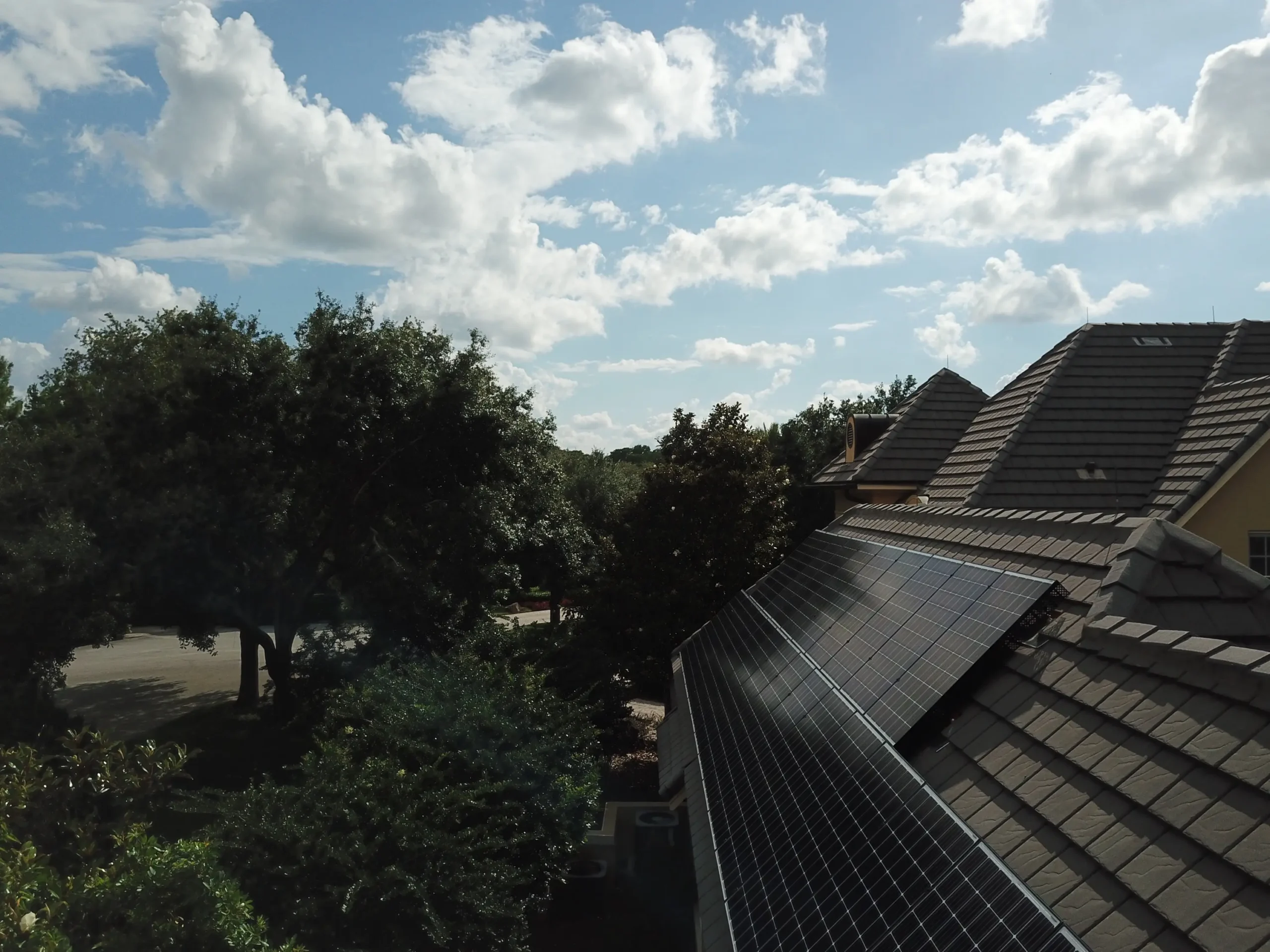
Almost any sound Florida roof can carry solar panels, but the roof material changes how the panels are attached, how the roof is sealed around each attachment, and how much care the crew needs on the roof. Asphalt shingle is the most straightforward. Concrete and clay tile take more work because the tiles have to be lifted, worked around, or replaced at each mount. Standing-seam metal is often the cleanest of all, because the racking can clamp to the seams without drilling through the roof. Flat roofs use their own racking methods.
This article walks through each common Florida roof type, what the installer actually does on it, and what to ask before you sign. We will keep it practical and honest: every roof is different, and the right method for your home comes from an inspection of your roof, not from a general rule.
A solar array is attached to your home’s structure, not just set on top of the roof. In most residential installs, mounts are fastened through the roof covering into the rafters or trusses underneath, and the racking that holds the panels is bolted to those mounts. Every place a fastener goes through the roof is a place that has to be sealed and flashed so water stays out.
That is where roof material comes in. Shingle, tile, metal, and flat roofs each shed water differently, so each one needs a different way of making those attachment points watertight. The roof material also affects how easily a crew can walk on it, how long the work takes, and what has to happen if the roof is ever repaired or replaced while the panels are on it.
Florida adds one more layer: wind. The array, its mounts, and the way they tie into your roof structure have to be designed for the wind requirements in the Florida Building Code for your location. That design work is part of the permit package, and we explain how that process works in our post on how long Florida solar permits really take.
Asphalt shingles are the most common residential roof in much of the country and a very common one in Florida. They are also the most straightforward roof to install solar on.
On a shingle roof, the installer locates the rafters or trusses, then fastens each mount through the shingles and the roof deck into the framing. The key step is the flashing. A metal or composite flashing plate slides under the shingle course above the mount and sits on top of the shingle below it, so water running down the roof flows over the attachment instead of into it. Many mounts also use a sealant or gasket at the fastener itself. Done properly, the flashing works with the way shingles already shed water.
A few things to know about shingle roofs and solar:
Tile roofs are everywhere in Florida, especially in South Florida and in many newer communities. They are durable and handsome, and they can absolutely carry solar. They just take more work and more skill than shingles.
The challenge is that tiles are rigid and can break if walked on or handled carelessly, and they sit above the waterproof layer underneath rather than forming a sealed surface themselves. The real water barrier on most tile roofs is the underlayment below the tiles. So the attachment has to go through the tile layer and be sealed at that underlayment level, while the tiles are put back in a way that still sheds water.
Installers generally use one of a few approaches on tile:
Whatever the method, two things matter on tile. First, breakage: it is normal for a few tiles to crack during the work, and a good installer plans for that, ideally with matching spare tiles on hand. If you have spare tiles from when the roof was built, tell your installer. Second, the underlayment: if the underlayment under your tiles is old, the roof may need attention before panels go on, even if the tiles themselves look fine from the street. Ask your installer to look at it.
Tile roofs also tend to take longer to install on, and the right method can depend on whether your tile is flat, low-profile, or high-profile barrel tile. Ask which method your installer plans for your specific tile and why.
Metal roofs are popular in Florida for their wind resistance and long service life, and they are often the friendliest roof type for solar. There are two very different kinds of metal roof, though, and the method depends on which one you have.
Metal roofs can be slippery, especially when wet or dewy, so crews need the right fall protection and footing. And because metal roofs often last a very long time, they can be a good match for the long service life of solar panels. For more on how long panels last here, see how long solar panels last in Florida.
Flat and low-slope roofs are common on many Florida homes, additions, and porches, and on most commercial buildings. They work well for solar too, with their own set of methods:
On a flat roof, the condition of the membrane and the drainage both matter. Panels should not block drains or create spots where water collects. If the membrane is near the end of its life, it is usually best to address it first. A flat roof also needs to be checked for whether the structure can carry the added load of the system.
Every Florida solar installation has to meet the wind requirements of the Florida Building Code for its location. In Miami-Dade and Broward counties, the code’s High-Velocity Hurricane Zone provisions add stricter requirements for roofing and for products used on the roof. In practice, this affects how many mounts are used, how they are spaced, which racking and attachment products can be used, and what engineering goes into the permit.
You do not need to become a code expert, but you should know the question to ask: how was this array designed for wind at my address, and what does the permit package include? A good installer can explain it in plain language. For how panels and racking hold up to storms in general, see can solar panels survive hurricanes in Florida.

Most residential roofs in good condition can carry a solar array, but that is something to confirm, not assume. Part of designing a system is checking the roof framing, the roof deck, and the condition of the roof covering. Concrete tile is already a heavy roof, so the added weight of an array is one of the things a designer looks at closely. Older homes, past repairs, or signs of water damage also deserve a closer look.
If anything raises a question, the designer may ask for more information, recommend repairs, or have an engineer review the structure. That is a good sign, not a bad one. It means someone is actually checking.
Homeowners worry about leaks, and it is a fair worry. Any time a roof is penetrated, the quality of the flashing and sealing is what keeps water out. No installer can honestly promise that a roof will never leak, because roofs age and storms happen. What a good installer can do is use attachment and flashing methods matched to your roof type, follow the product makers’ instructions, and stand behind the workmanship.
Before you sign, ask what the installer’s workmanship warranty covers for roof penetrations, how long it lasts, and who you call if you ever see a stain on the ceiling. Also ask how your roofing warranty treats solar work, and check how your homeowners policy treats solar; our post on whether homeowners insurance covers solar panels in Florida has a list of questions for your insurer.
Solar panels can last for decades, and roof coverings do not all last that long. If your roof will need to be replaced while the panels are on it, the panels have to come off and go back on. That is called a removal and reinstall. It is a normal job, but it takes time and it costs money, so it is worth thinking about up front.
The practical steps are simple: know the age and condition of your roof, ask your installer whether they recommend replacing the roof first, and ask whether they offer removal and reinstall service later if you need it. Our roof and solar timing guide goes deeper on this.
Can you put solar panels on a tile roof? Yes. It takes more care and usually more time than a shingle roof, because tiles have to be worked around at each mount and the seal is made at the underlayment below the tiles.
Is a metal roof good for solar? Often, yes. On standing-seam metal, racking can often clamp to the seams without drilling through the roof.
Will solar panels damage my roof? A properly designed and installed system should not. The quality of the attachments and flashing is what matters, which is why the installer’s method and workmanship warranty are worth asking about.
Should I replace my roof before going solar? If your roof is near the end of its life, it often makes sense to replace it first, so you do not have to remove the panels to reroof later.
Do I need to clean around the panels on my roof? Usually very little. See our guide to solar panel maintenance and cleaning in Florida.
For more Florida-specific answers on permits, HOAs, batteries, and storms, see our Florida Solar FAQ.
Your roof type does not decide whether you can go solar, but it does decide how the job should be done. Shingle roofs use flashed mounts tucked under the shingle courses. Tile roofs need tile-specific mounts, careful handling, and a seal at the underlayment. Standing-seam metal can often take clamp-on racking with no roof penetrations. Flat roofs use tilted, attached, or ballasted racking matched to the membrane and the wind requirements. In every case, the condition of the roof, the wind design for your address, and the quality of the workmanship matter more than the material itself. If you would like a Florida-licensed team to look at your roof and design a system around it, we are happy to help.
Get a free, no-pressure solar assessment for your Florida home.

About the author: Joe Cataldo is the CEO of Goldin Solar, LLC, a Vero Beach, Florida–based solar installation company serving homeowners and businesses across the state. He holds a Florida Certified Solar Contractor license (CVC57300) and a Florida Certified Electrical Contractor license (EC13013985), both issued by the Florida Department of Business and Professional Regulation. Joe personally oversees system design standards and code compliance on Goldin Solar projects.